If you own or manage a business, you have probably asked yourself at some point: “Is my building actually secure?” It is a fair question, and the honest answer is that a lot of businesses are more vulnerable than they realize.
A commercial security system is not just about having a camera mounted in a corner. It is a layered, interconnected setup designed to detect threats, deter criminal activity, and keep your people and assets safe around the clock.
This guide explains what makes a system effective, which components matter most, and how to choose the right setup for your situation.
Why Does Your Business Need a Security System?
Security threats to businesses come in many forms. Theft, vandalism, unauthorized access, workplace accidents, and even environmental hazards like smoke or flood damage can all put your operations and your people at serious risk.
Beyond physical safety, you must also consider compliance with security regulations. Many industries, including health care, retail, and finance, are required by law to maintain certain levels of surveillance and data security. A weak or outdated system is not just a safety problem.
It can become a legal and financial liability.
The good news is that modern commercial security systems are designed to be scalable, intelligent, and more affordable than most business owners expect.
The 6 Core Components of a Commercial Security System
Understanding the components of a commercial security setup is the first step toward building something that actually works. Here is a breakdown of what a robust security system typically includes.
Intrusion Detection and Alarm Systems
At the foundation of any good commercial security plan is an alarm system. These systems are essential for detecting unauthorized entry and triggering an immediate response.
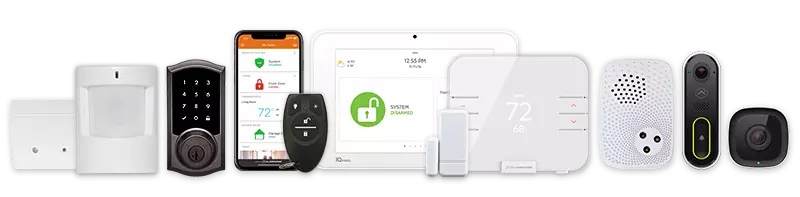
A modern alarm system uses sensors placed on doors, windows, and other entry points. When a breach is detected, the system alerts your monitoring center, your security team, or local law enforcement, depending on how it is configured. Some systems also include glass break sensors and motion detectors that cover wide interior areas.
Alarm systems function best when they are monitored 24/7. UL-certified alarm monitoring ensures that a trained response team is always watching, even when your staff is not on-site.
This level of security significantly reduces the window of time a criminal has to act undetected.
Security Cameras and Video Surveillance
A security camera setup is one of the most visible and effective layers of protection for any commercial property. Modern surveillance systems go far beyond simple recording. They include features like pan-tilt-zoom cameras, night vision, and video content analysis that can flag unusual activity automatically.
CCTV systems provide real-time visibility into what is happening across your property at all times. Whether you are managing a single office or multiple locations, commercial video surveillance systems give you the ability to monitor live feeds, review recorded footage, and use video evidence if an incident occurs.
Smart cameras today can also integrate with analytics platforms that use facial recognition and behavioral analysis to detect potential security breaches before they escalate. That kind of proactive capability is a major advantage over traditional, passive recording setups.
Access Control Systems
Access control is one of the most underestimated elements of a good commercial security system. At its core, access control systems regulate who can enter specific areas of your building and when.
Basic access systems use card readers or keypad entry. More advanced systems incorporate biometric systems such as fingerprint scanning or facial recognition to verify identity before granting entry. This eliminates the risk of shared or stolen credentials compromising your security posture.
For businesses dealing with sensitive data, valuable inventory, or restricted areas, advanced access control solutions are not optional; they are essential. Access control also generates audit logs that track who accessed which areas and at what time. That information is invaluable during an investigation or for maintaining overall security posture.
Intercom systems are often integrated with access control to add a human verification layer, especially at main entry points. Combined, these tools give you full control over your security without relying solely on on-site security guards.
Environmental and Hazard Monitoring
A comprehensive security system does not just protect against human threats. It also monitors for environmental hazards that can cause significant damage to property and put lives at risk.
Modern commercial security systems often include:
- Smoke detectors and fire alarm systems that trigger automatic alerts and, in some cases, sprinkler activation
- Carbon monoxide sensors
- Flood and water leak detectors
- Temperature monitoring, which is especially important in facilities that store sensitive inventory, equipment, or temperature-dependent goods
Heat and thermography sensors can also detect abnormal thermal activity in server rooms or electrical panels before a fire starts. This kind of early warning is something no on-site security personnel can reliably provide on their own.
Smart Energy Management and Building Controls
Many business owners are surprised to learn that energy management is increasingly recognized as a core part of modern business security. Smart thermostats, HVAC controls, and lighting systems can all be integrated into your overall security infrastructure.
Why does that matter? Unusual patterns in heating, ventilation, and air conditioning usage or lighting can indicate after-hours access or equipment malfunctions. Smart energy management systems for businesses also reduce operating costs while giving you centralized control over your building environment.
When your systems are all connected, you gain both efficiency and visibility, two things that directly enhance your business’s security and your bottom line.
Structured Cabling and Network Infrastructure
None of the above components work reliably without a solid physical and digital backbone.
Structured cabling is what makes an integrated system possible. It connects your cameras, sensors, access control devices, and alarm systems into a single, manageable network.
Poor cabling is one of the most common reasons commercial security systems underperform.
Loose connections, improper routing, or inadequate bandwidth can cause cameras to drop off the network, alarms to malfunction, or access control logs to fail to record properly.
Investing in enterprise structured cabling services ensures that every component in your setup operates the way it was designed to. A well-built network infrastructure also makes it easier to scale your system as your business grows or your security needs change.
Choosing a Commercial Security System: What to Look For
Now that you understand the core components, how do you actually go about choosing a commercial security system that fits your operation? Here are the key factors to evaluate.
Assess Your Specific Security Challenges
Every business is different. A retail store faces different security risks than a medical facility or a data center. Start by walking through your property and identifying your most significant vulnerabilities, entry points, blind spots, high-value areas, and employee-only zones.
Ask yourself where you have experienced security concerns in the past and where your current setup has gaps. That assessment becomes the foundation of your security plan.
Look for a System That Integrates Multiple Security Layers
The best commercial security is not one technology working alone. It is multiple security components working together. Look for a system that allows your cameras, alarms, access control, and environmental monitors to communicate with each other.
An integrated system means that when a motion detector triggers after hours, your cameras can automatically shift focus to that area, your alarm system can activate, and your monitoring center gets notified, all within seconds. That kind of coordinated response is far more effective than any single tool operating in isolation.
Prioritize Professional Monitoring
A security system that meets today’s business standards needs to include professional, around-the-clock monitoring. When an alarm is triggered or a sensor detects an anomaly, you want a trained team responding immediately, not an automated message you might see hours later.
UL-certified monitoring services are the gold standard here. They ensure the system is always ready to respond and that law enforcement or emergency services are contacted without delay.
Ensure Scalability and Flexibility
Modern security systems are designed to grow with your business. Whether you are adding new locations, upgrading cameras, or expanding access control zones, ensure that the system you choose can accommodate those changes without requiring a full replacement.
No-contract options and systems built on open, standards-based technology give you more flexibility over time. You should not have to be locked into a rigid setup that does not adapt to your evolving security needs.
Work With Security Experts Who Know Commercial Properties
There is a real difference between residential and commercial security installations. Commercial properties are larger, more complex, and face a broader range of threats. Working with security experts who specialize in systems for business, not just home setups, makes a significant difference in how well your system performs.
A good professional security partner will assess your space, design a system tailored to your risks, install it correctly, and provide ongoing support. That kind of relationship is what separates a reliable security solution from a box of equipment that looks good on paper but falls short in practice.
What Makes a Good Commercial Security System Stand Out?
When you put all these elements together, the best business security system is one that is proactive, not just reactive. It uses advanced security technology to detect threats early, responds automatically, and gives you real-time visibility and control over your security at all times.
A good security strategy also accounts for the human element. Technology is only as effective as the people and processes behind it. That means training your staff, setting clear access policies, and conducting periodic security audits to identify new vulnerabilities as your business changes.
Modern commercial security systems built around these principles do not just protect your physical assets. They protect your employees, your customers, your data, and your reputation.
For businesses in Texas looking for customized business security systems that combine professional monitoring, commercial-grade equipment, and no-contract flexibility, True Home Protection offers the kind of tailored, expert-driven approach that turns good intentions into real protection.
Frequently Asked Questions
What are the main components of a commercial security system?
A commercial security system typically includes alarm systems with intrusion detection sensors, security cameras and video surveillance, access control systems, environmental monitoring (smoke, flood, heat), and the network infrastructure that ties it all together.
How is commercial security different from residential security?
Commercial properties face more complex security challenges, including larger physical spaces, multiple entry points, employee access management, and regulatory compliance requirements.
Commercial systems are built to handle higher data loads, more devices, and greater customization than standard residential setups.
Do I need professional monitoring for my business?
Yes. Professional, UL-certified monitoring ensures that your alarm system triggers a real response, not just a notification you might miss. It is one of the most important investments you can make in your overall security posture.
Can I integrate my existing equipment into a new security system?
In many cases, yes. Working with a provider that supports existing equipment can reduce costs significantly. Ask your security provider about compatibility before assuming you need to start from scratch.
How much does a commercial security system cost?
Costs vary depending on the size of your property, the number of cameras and sensors needed, the type of access control system installed, and whether you include professional monitoring.
Transparent pricing with no hidden fees is a sign of a trustworthy provider.
Conclusion
A good commercial security system is not a single product; it is a thoughtfully built combination of technology, monitoring, and professional expertise. From alarm systems and surveillance cameras to access control and environmental hazard detection, every layer plays a role in protecting your business.
If you are ready to build a security plan that actually fits your operation, reach out to True Home Protection at +1-800-393-6461 or visit truehomeprotection.com to explore your options today. Learn more about what we do and our business by checking on the links below!
Replacing Battery on Honeywell 5816 Door/Window Sensor | Replacing the Battery on 2GIG Carbon Monoxide Detector | 2GIG GC2 User Manual | 2GIG GC3 User Manual | 2GIG SP2 Installation Manual | Alarm.com: Adding User Codes for System and Door Lock | Alarm.com Cameras: Setting Up Object Detection Recordings (V722W & V522IR) | Alarm.com Doorbell Camera Flashing Orange | Alarm.com Doorbell Camera LED Guide | Alarm.com Doorbell Camera Troubleshooting | Connecting Alarm.com Indoor Camera to New Wi-Fi Network | Kwikset 914 Battery Replacement | LTS DVR User Manual | NVMS7000 User Guide – IP Address & Port Forwarding | EDGE Smart Home Manual | GC2e Fingertip Guide | IQ Mini S-Line Quick Guide | IQ Panel 4 Comparisons | IQ Panel 4 Specifications | IQ4 Panel Manual & User Guide | IQ4 Panel Quick Guide | LTN8689 Series Network Video Recorder Specifications | LTN8689 Series Network Video Recorder User Manual | PG303 Installation Guide | PG9945/PG8945/PG4945 Installation Guide | Qolsys IQ4 Installation Manual | Alarm.com Cameras: Object Detection Recordings Setup (PDF)