If you manage or own a commercial property, you already know that keeping it safe is not as simple as locking the front door at the end of business hours. Threats have evolved, buildings have grown more complex, and the expectations around security have risen sharply. So what actually works when it comes to modern commercial building security?
This article breaks it down in plain terms, what technologies are out there, how they work together, and how to figure out what your property actually needs.
Why Commercial Building Security Has Changed
The security industry has shifted dramatically over the last decade. Gone are the days when a digital video recorder in a back room and a basic alarm system were enough to protect a commercial space. Today, security threats range from physical intrusion and theft to cyberattacks and data breaches that can compromise your entire operation.
Modern commercial buildings are smarter and more connected than ever, and that connectivity creates both opportunity and risk. A robust security strategy has to account for both the physical and digital layers of protection.
That is why the best commercial security systems today do not work in isolation. They integrate cameras, sensors, alarm devices, access control, and analytics into a single, manageable platform.
The Core Components of a Modern Commercial Security System
Intrusion Detection and Alarm Systems
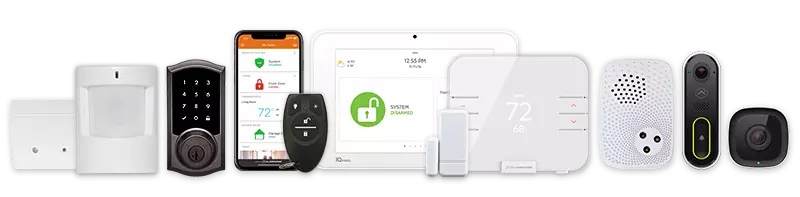
At the foundation of any commercial security system is a reliable alarm system. Modern alarm systems go far beyond a siren that triggers when a window breaks. Today’s systems include motion detectors, door and window sensors, glass break detectors, and environmental sensors that monitor for smoke, temperature changes, and other hazards.
One of the biggest improvements in this area is the dramatic reduction in false alarm rates.
Earlier systems were notorious for triggering unnecessarily, which frustrated security teams and strained relationships with law enforcement. Modern intrusion detection technology uses smarter sensors and AI-assisted filtering to reduce those false alarm incidents significantly.
For business owners managing multiple buildings or large commercial real estate portfolios, a centralized alarm monitoring platform allows every alert to be tracked and responded to from one place. UL-certified monitoring, like the kind offered through True Home Protection, ensures that alerts reach trained professionals around the clock, not just during business hours.
Video Surveillance Systems for Commercial Properties
Video security has come a long way from grainy footage on a looping tape. Today’s business video surveillance systems use high-definition IP cameras with night vision, pan-tilt-zoom camera functionality, and wide-angle coverage to eliminate blind spots across large commercial properties.
What makes modern video surveillance genuinely useful is not just the image quality; it is the intelligence built into the system. Video content analysis and AI-powered analytics can detect unusual movement patterns, flag unattended objects, and even trigger an alert before an incident escalates. This kind of proactive detection is something older, outdated systems simply cannot offer.
Cloud-based video storage has also changed the game. Instead of relying on a physical digital video recorder that can be stolen or damaged, cloud-based systems store footage securely off-site. That data remains accessible via a mobile app or desktop interface, giving managers real-time visibility even when they are away from the property.
For larger operations, camera systems can be scaled across multiple buildings with centralized management, which is especially useful for enterprise-level commercial real estate or multi-site operations. True Home Protection offers business video surveillance systems designed to scale with your property’s specific needs.
Access Control Systems: Who Gets In Matters
If video surveillance tells you what happened, access control determines what is allowed to happen in the first place. This is where physical security gets really strategic.
Access control systems manage entry points throughout a building, such as doors, elevators, server rooms, parking structures, and more. Instead of relying on traditional keys that can be lost or copied, modern systems use credentials like keycards, PIN codes, biometric scans, and even Face ID technology.
Radio-frequency identification (RFID) is widely used in commercial access control, allowing employees to tap a keychain or card to gain entry. Android-compatible mobile apps now allow credentials to be stored on a smartphone, reducing the need for physical tokens altogether.
What separates great commercial access control solutions from basic ones is integration. The best systems integrate with your alarm system, video surveillance, and building management software so that every entry and exit is logged, monitored, and cross-referenced. If someone uses stolen credentials after hours, the system can automatically trigger an alert and notify security personnel.
For businesses with complex layouts or high-security zones, role-based access control lets administrators define exactly who can enter which areas and when. This kind of granular control is essential for office buildings, healthcare facilities, data centers, and any property with sensitive assets.
True Home Protection provides commercial access control solutions built for real-world business environments, with options ranging from small businesses to large enterprise deployments.
Advanced Technologies That Are Raising the Bar
AI-Powered Analytics and Smart Detection
Artificial intelligence has become one of the most powerful tools in electronic security. AI-driven analytics allow surveillance systems to do more than record; they learn. Over time, these systems can establish behavioral baselines and flag anomalies, giving security professionals an edge in crime prevention before an incident occurs.
This kind of intelligent detection and alarm system integration reduces the burden on security personnel who cannot realistically watch every camera feed in real time. Instead, the system draws attention to what matters, filtering out irrelevant motion like passing vehicles or wildlife.
Cloud-Based Management and Remote Monitoring
Cloud computing has fundamentally changed how businesses manage their security setup. With cloud-based platforms, a business owner can check live camera feeds, review access logs, receive alerts, and manage their entire system from a smartphone, whether they are across town or across the country.
This flexibility is especially valuable for multi-site operators. True Home Protection’s multi-site enterprise security management platform allows organizations to monitor and control security across multiple locations from a single dashboard, simplifying both oversight and response.
Cloud-based systems also offer stronger data protection. With encryption and secure data collection protocols, sensitive footage and access logs are protected from malware and unauthorized access, critical in a time when cyberattacks on businesses are on the rise.
Structured Cabling: The Infrastructure Behind It All
Here is something that does not get enough attention: none of your advanced security technology works reliably without a solid, well-designed network infrastructure.
Professional structured cabling services ensure that your security devices, cameras, sensors, control systems, and access control hardware are connected on a stable, high-performance network. This is the backbone of any modern security solution, and it is worth investing in properly from the start.
How to Build a Security Strategy That Actually Fits Your Building
Choosing the best security systems for commercial properties is not about buying the most expensive products or copying what a competitor uses. It is about understanding your specific security requirements, your building’s layout, your workforce, and the nature of your business operations.
A good security expert will walk through your property, identify vulnerabilities, and recommend a layered approach that integrates all the right components. For example, a warehouse has different security needs than a medical office or a retail strip center.
The best business security system is the one that is designed around your reality, not a generic template. That means combining the right alarm system, access control, video surveillance systems, and monitoring to create a comprehensive security layer that protects your people, your assets, and your data.
Companies like ADT Commercial and Vivint offer well-known security products, as does SimpliSafe for smaller deployments. But for Texas businesses that want enhanced security with a local touch, no-contract flexibility, and same-day service backed by an A+ BBB rating, True Home Protection stands out as a trusted partner.
Explore their full range of commercial security systems for businesses to see what a tailored, advanced security approach looks like in practice.
Frequently Asked Questions
What are the best security systems for commercial buildings?
The best commercial security systems combine intrusion detection, video surveillance, access control, and 24/7 alarm monitoring into a single integrated platform. The right choice depends on your building size, industry, and specific security requirements.
How does access control improve commercial building security?
Access control systems restrict entry to authorized personnel, log all activity, and integrate with other security systems to create a smarter, more responsive security layer. They help prevent unauthorized access and reduce the risk of internal theft or data breaches.
What is the benefit of cloud-based security systems?
Cloud-based systems offer remote access, off-site data storage, encrypted backups, and real-time alerts via smartphone. They are easier to scale and manage across multiple locations compared to traditional on-premise setups.
How can small businesses afford a commercial-grade security system?
Many providers, including True Home Protection, offer no‑contract options and transparent pricing with no hidden fees, making it easier for small businesses to protect their businesses without a major upfront investment.
Conclusion
Modern security systems for commercial buildings work best when they are designed to integrate, not operate in silos. From smart intrusion detection and cloud-based video surveillance to advanced access control and professional cabling, every layer matters.
If you are ready to safeguard your business with a solution built around your actual needs, True Home Protection is here to help. Reach out at +1-800-393-6461 or visit truehomeprotection.com to take the first step toward smarter commercial security. Learn more about what we do by visting any of the following pages:
IQ2 Motion Detector Installation | IQ2 Outdoor Camera Device Training | Pairing a Qolsys IQ Remote Secondary Touchscreen | IQ2 Smoke Detector Device Training | IQ2 Smoke Detector Installation | IQ2 Thermostat Device Training | IQ2 Wall Mounting Installation | IQ2 Window Sensor Installation | IQ2 Z-Wave Lamp Module Device Training | Performing a Cell Phone Test on 2GIG GC2 Panel | Performing a Cell Phone Test on 2GIG GC3 Panel | Programming a 2GIG Carbon Monoxide Detector on 2GIG GC2 Panel | Programming a 2GIG Thin D/W Sensor on 2GIG GC2 Panel | Replacing Batteries on Kwikset 888 Z-Wave Door Lock | Replacing Battery on 2GIG Fire Fighter Detector | Replacing Battery on 2GIG Glass Break Detector | Replacing Battery on 2GIG Motion Detector | Replacing Battery on 2GIG Recessed Door Sensor | Replacing Battery on 2GIG Thin Door/Window Sensor