If you’re looking into home or business security, you’ve likely heard the term “central alarm monitoring system.” It sounds technical, maybe even a bit overwhelming.
But understanding how central station monitoring works can make all the difference in keeping your family, property, or business safe. Let’s break it down clearly, using real-world examples and Texas-relevant scenarios to help you understand exactly how a central alarm setup protects what matters most.
What Is a Central Station Alarm System?
A central station alarm system refers to a monitored security setup where alarms are routed to a dedicated monitoring center staffed by trained professionals. Rather than a local alarm system that only makes noise, this type of security system sends a signal to a secure facility known as a central monitoring station when an alarm is triggered.
This monitoring staff is available 24/7 to assess the situation and determine if emergency services, like the police or fire department, should be dispatched.
Key Components of a Central Monitoring Station
A true central station is a secure facility equipped with:
- Redundant power sources, internet connections, and GPRS backup
- Trained professionals who monitor incoming alerts
- Automation software and communication protocols to assess threats in real time
- Certification from third-party inspection companies like UL (Underwriters Laboratories) and FM Global
In Texas, UL-listed central monitoring stations must meet rigorous standards for regulatory compliance, physical security, and operational reliability.
How Central Station Monitoring Works
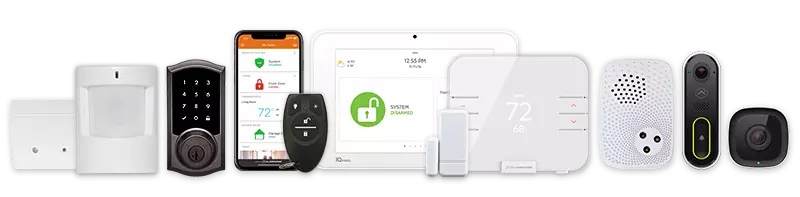
When you install a monitored alarm system at your home or business, every sensor, motion detector, or alarm device is wired or wirelessly connected to an alarm panel. That panel communicates with a central monitoring station.
Here’s what happens when an alarm is triggered:
- Detection: A sensor detects unusual activity – like smoke, motion, or a break-in.
- Alarm Signal Transmission: The alarm panel sends a signal to the central alarm monitoring station.
- Analysis: Monitoring staff reviews the signal using software and potentially video surveillance or other integrated fire or intrusion detection systems.
- Response: If the threat is real, the station will dispatch emergency services or notify local authorities, police, or fire departments.
- Confirmation: In some cases, the operator may attempt to contact the property owner or a designated contact before taking action to reduce false alarms.
What Does a Central Alarm Monitoring Center Monitor?
Central station alarm services keep an eye on more than just break-ins. Systems provide a layer of protection across multiple risk categories:
- Burglar alarms: Detect unauthorized intrusions
- Fire alarm systems: Monitor smoke detectors, heat sensors, and carbon monoxide detectors for smoke, fire, or gas leaks
- Medical emergencies: Alert staff to health crises via emergency buttons
- Environmental threats: Detect water leaks or temperature drops
- Security alarm events: Monitor motion detectors and closed-circuit television feeds
This makes security monitoring services ideal for homes, vacation properties, retail shops, and industrial sites.
Benefits of Central Station Monitoring
Investing in a central station service brings several unique advantages compared to self-monitored or local systems.
Faster Response Times
With 24/7 monitoring in place, trained professionals respond to alarm signals almost instantly. This ensures a quicker response time from emergency services, dramatically reducing potential damage or loss.
Professional Verification Reduces False Alarms
Without central station monitoring in place, even a simple motion sensor could result in a call to the police. Monitoring staff assess the legitimacy of the alarm, helping reduce false alarms and unnecessary dispatches.
Enhanced Safety and Security
Monitored systems offer comprehensive security that extends to fire protection, burglary detection, and more. As a property owner, you gain peace of mind knowing all threats are being tracked professionally.
Insurance Benefits
Many insurance companies offer discounts to property owners who are equipped with monitored security systems. This adds long-term financial benefits to your investment in safety.
All-In-One Security Solutions
Professional central station monitoring can integrate various security devices, including smoke detectors, security alarms, intrusion detection systems, and much more, into a single streamlined platform.
Central Station Monitoring Services vs. Local Systems
Let’s compare central monitoring stations with local alarm system setups:
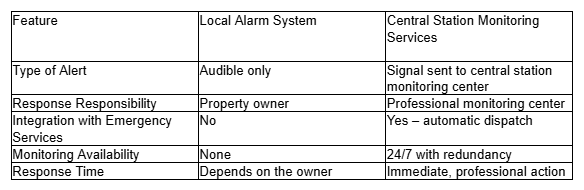
Without a central alarm, a security system might scare off a burglar, but there’s no guarantee anyone will actually respond. With professional alarm monitoring, trained operators assess the situation and respond to alarm events quickly and effectively.
How Alarm Monitoring Centers Handle Different Emergencies
Different types of signals are handled based on severity and where they’re from.
- Fire alarms: These signals receive immediate attention due to the potential for rapid spread. The system sends a fire signal to the central station, prompting automatic dispatch of fire emergency services and possibly alerting FM Global for inspections.
- Medical emergencies: Triggering a medical button prompts the monitoring system to initiate a welfare check and notify first responders.
- Burglar alarms: The operator may verify the threat before contacting law enforcement, based on motion detector data, camera footage, and location history.
Professional Central Station Monitoring in Texas
If you’re in Texas and looking to enhance security for your home or business, integrating central station alarm monitoring into your setup is one of the most effective steps you can take. Many modern security systems come preconfigured for direct connection to a central monitoring station.
Partnering with a trusted provider can ensure that your system not only meets local safety regulations but is also optimized with the latest automation and communication technologies.
For instance, professional alarm monitoring services from experienced teams ensure you’re covered every second of the day.
How Monitoring Companies Ensure Reliable Service
Monitoring companies that specialize in central station alarm services use strict protocols and technologies to guarantee rapid and dependable protection. Some of the methods include:
- Redundant communications: Including GPRS, wired internet, and cellular backups
- Monitoring association oversight: Ensuring quality control through entities like the Monitoring Association which represents professional monitoring companies
- Security industry compliance: Adhering to inspections, certifications, and third-party reviews
This level of professionalism sets central station monitoring systems apart from DIY solutions or less robust options.
Why Central Monitoring Station Quality Matters
Not all monitoring stations are created equal. A top-tier central monitoring station will:
- Be certified by UL or FM Global
- Use automation software for signal prioritization
- Respond to alarm events with optimized communication protocols
- Maintain continuous training for staff to assess and respond efficiently
Simply put, the quality of your monitoring services can directly influence the success of your security system.
Conclusion: Why Central Alarm Monitoring Is Worth It
At the end of the day, a central alarm monitoring station isn’t just a fancy add-on to your security setup – it’s the heart of it. From burglar alarms to integrated fire systems, these solutions offer a complete layer of protection that makes all the difference when seconds count.
Whether you’re trying to reduce crime risk, ensure quicker emergency response times, or just sleep better at night, investing in a central station alarm system is one of the smartest security measures you can take today.
Want to explore more about how these systems work and what might be right for you? Check out our professional alarm monitoring services to learn how we can enhance security for your property in Texas. And if you found this article helpful, consider sharing it with someone who needs to know how professional monitoring works. Reach out Today.