If you live in the Dallas-Fort Worth area, you already know how seriously Texans take protecting what is theirs. But here is a question worth asking: is your security camera system actually connected to your alarm system, or are they just two separate tools sitting on the same property doing their own thing?
For many homeowners and business owners across DFW, the answer is the latter. And that gap in integration is costing them real security.
What Does “Integrated” Actually Mean?
When people hear “integrated security system,” they sometimes picture a tangled mess of wires and complicated tech. In reality, integration just means your cameras and your alarm system are talking to each other.
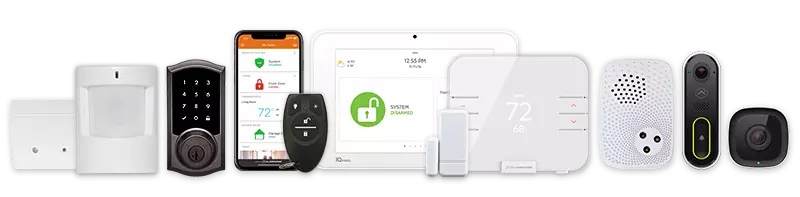
Instead of your motion sensors triggering an alarm in one silo and your cameras recording footage in another, an integrated system combines both into a single, coordinated response. When an alarm is triggered, cameras automatically begin recording that exact zone. Alerts get sent to your phone. Monitoring centers get real-time visual confirmation. Everything works together instead of in isolation.
This is the difference between a security setup that reacts and one that actually responds.
Why DFW Homeowners and Businesses Need Integration Now
The Dallas-Fort Worth metroplex is one of the fastest-growing regions in the country. With that growth comes opportunity, but also increased risk. Property crime, package theft, and commercial break-ins remain persistent concerns across neighborhoods from Plano to Fort Worth to Irving.
According to the FBI’s Uniform Crime Reporting data, property crimes continue to be among the most common offenses reported nationally, and urban growth corridors like DFW are not immune. The good news is that homes and businesses with visible, active security systems are significantly less likely to be targeted.
But visibility alone is not enough. Cameras that are not connected to an alarm system can capture a crime, but they cannot help prevent one. Alarm systems without cameras give you noise but no context. Together, they give you a genuinely powerful deterrent and response tool.
How Integration Works in a Real Home or Business Setting
Picture this: it is 2 a.m., and a motion sensor near your back door is triggered. In a non-integrated setup, the alarm sounds, and that is more or less the end of the story until someone responds.
In an integrated setup, the alarm trigger instantly pulls up the camera feed for that zone. Your monitoring center can visually confirm whether it is a real threat or a false alarm. You get a notification on your phone with a live or recorded video clip. Law enforcement can be dispatched with actual visual information rather than just an alarm signal.
For businesses, this is especially critical. A warehouse in Garland or a retail location in Frisco cannot afford to rely on alarm noise alone. Verified video response reduces false alarm fees, speeds up police dispatch, and gives business owners documentation they can actually use.
The Role of UL-Certified Monitoring
Not all alarm monitoring is created equal. One detail that matters enormously is whether your monitoring center is UL-certified. This certification means the facility meets rigorous standards for reliability, staffing, and response procedures.
True Home Protection offers UL-certified alarm monitoring, which means when your integrated system sends an alert, it is being received and acted upon by a professional center that is held to the highest standards in the industry. That is not a small thing when seconds matter.
What to Look for in an Integrated Security System
If you are shopping for a system or evaluating your current setup, a few things are worth paying close attention to.
Camera and sensor compatibility is the starting point. Not every camera brand plays nicely with every alarm panel. This is where working with a local provider who knows the technology inside and out makes a real difference, rather than piecing together a DIY setup from three different manufacturers.
Smart home integration is increasingly important for residential properties. The ability to arm your system, check camera feeds, lock doors, and receive alerts all from a single app transforms how you interact with your home security. True Home Protection’s smart home systems are designed with this kind of seamless control in mind.
Commercial-grade equipment matters even for residential use. Consumer-grade cameras often struggle in low light, have limited storage, and can fail under the kind of scrutiny that comes after an actual incident. Professional-grade equipment captures clear footage and holds up over time.
No-contract flexibility is something DFW residents should insist on. Being locked into a long-term contract with a national chain that provides little local support is a frustration many homeowners know too well. True Home Protection offers no-contract options with transparent pricing, which means you are choosing to stay because the service is excellent, not because you are trapped.
Residential vs. Commercial Integration Needs
The core technology is similar, but the scale and focus differ depending on whether you are protecting a home or a business.
For residential customers, the priority is typically remote access, fast alerts, and simple operation. You want to know immediately if something is wrong and be able to verify it without having to call anyone. Integration makes that possible.
For commercial properties, the needs expand. Multi-camera systems covering large areas, access control integration, structured cabling for reliable network infrastructure, and enterprise-level monitoring are all part of the picture. True Home Protection serves both markets across DFW, which means they understand the difference and can design systems accordingly.
Renters and Apartment Dwellers Are Not Left Out
One common misconception is that integrated security is only for homeowners. Renters and apartment residents in DFW have real security needs too, and there are solutions designed specifically for them. Wireless systems that do not require drilling or permanent installation can still deliver camera-and-alarm integration that works in a rental unit.
Why Integrated Security Matters in DFW
Installation is only the beginning. Knowing how to use your system, keeping firmware updated, and having a provider you can actually reach when something goes wrong are what determine whether your security investment pays off over time.
True Home Protection offers same-day service and is known locally for responsive support. If you are adding cameras to an existing alarm system or starting fresh, the process does not have to be disruptive or complicated.
If you are ready to move beyond a basic setup and want a system that genuinely protects your home or business, explore the comprehensive home security systems True Home Protection offers across the DFW area.
Final Thoughts
Security camera systems and alarm systems are both useful on their own. But in the DFW area, where the stakes are real and the region is growing fast, integration is what separates a passive setup from an active layer of protection.
The technology is accessible, the installation does not have to be complicated, and the peace of mind that comes from knowing your cameras and alarms are working as one system is well worth it. Whether you are protecting a family home in Southlake or a commercial property in downtown Dallas, an integrated approach is the smarter play.
Call True Home Protection at +1-800-393-6461 to talk through your options with someone who knows DFW security inside and out.