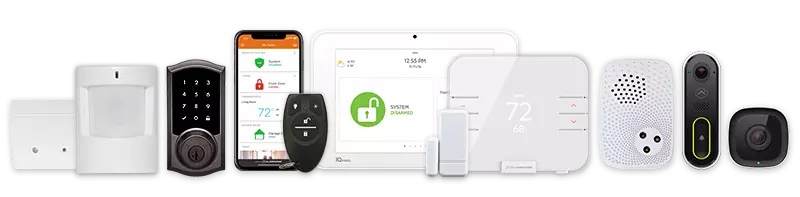
If you’ve ever tried to build out a business security system, you’ve probably hit this question: do you need a glass break sensor, a motion sensor, or both? It sounds like a simple choice, but the answer matters more than most people realize.
Both sensors serve a real purpose. But they work differently, catch different threats, and fit into your system in different ways. Let’s break it down so you can make a smart decision for your business.
How Each Sensor Actually Works
What a Motion Detector Does
A motion detector – often called a motion sensor – detects physical movement inside your business.
Most use passive infrared (PIR) technology, which picks up changes in heat signatures as a person moves through a room. When the sensor detects motion, it triggers your security alarm.
Motion sensors are typically placed indoors to cover high-traffic areas like hallways, living rooms, or the attic. They’re your last line of defense – catching intruders who have already made it inside.
What a Glass Break Detector Does
A glass break detector is a specialized alarm device that listens for the specific sound frequency produced when glass shatters. It’s designed to catch a break-in at the perimeter, before someone sets foot inside.
These sensors are usually mounted on walls or ceilings near windows, sliding doors, or glass panels. A single glass break detector can cover multiple panes within a certain radius, making it a cost-effective addition to your system.
The Key Difference: Perimeter vs. Interior Protection
This is where the real comparison lives. A motion detector works inside your business. A glass break sensor works at your perimeter.
Think of it this way – if someone smashes a window to get in, a glass break detector catches it immediately. A motion sensor would only trigger after that person is already walking around inside your house. That’s a significant difference in response time and peace of mind.
For Texas businesses with large windows, back entrances, or sliding door setups, perimeter protection matters a lot. The quicker your security alarm goes off, the faster monitoring teams can respond and the more likely a would-be intruder is to flee.
When a Motion Sensor Makes More Sense
Motion detectors are reliable, affordable, and versatile. They’re a staple in nearly every business security system for good reason.
They work well in rooms where glass break detection isn’t practical – like interior hallways, stairwells, or the attic. They also pair well with home automation setups, allowing you to trigger lights, cameras, or alerts based on detected movement.
One downside worth knowing: motion sensors can cause a false alarm if a pet triggers them or if the sensor placement isn’t quite right. Choosing the right sensitivity settings and placement goes a long way toward avoiding that headache.
When a Glass Break Sensor Makes More Sense
If your business has a lot of glass – think large picture windows, a sunroom, or multiple sliding doors – a glass break detector adds a layer that motion sensors simply can’t provide.
Glass break sensors are especially useful when you want to arm your system while people are still inside (called “stay mode”). In that case, you wouldn’t want motion sensors going off while you’re walking around at night, but you’d still want your perimeter protected.
Do You Really Have to Choose Just One?
The honest answer is: no. Most security professionals will tell you these two sensors complement each other rather than compete.
A well-designed system uses glass break detectors at the perimeter – covering windows and glass doors – while motion detectors cover the interior zones. Together, they create overlapping layers of protection that give your security alarm the best chance of triggering early and accurately.
There’s also a practical insurance angle here. Many insurance providers offer discounts when your system includes both perimeter and interior sensors, since the combined setup dramatically reduces break-in risk.
Other Sensors Worth Knowing About
While you’re building out your system, it’s worth mentioning that door and window contact sensors work alongside glass break detectors – they trigger when a door or window is opened, not just broken. Adding a carbon monoxide detector to the mix covers a different kind of threat entirely but rounds out a truly complete business protection setup.
The goal isn’t to pile on devices for the sake of it. It’s to make sure every realistic point of entry and risk is covered without gaps.
Which Sensor Fits Your Business Security Setup?
Choosing between a glass break sensor and a motion detector doesn’t have to be complicated.
Glass break detectors protect your perimeter the moment someone tries to force entry through a window or sliding door. Motion detectors catch movement inside your business if someone makes it past that first line. Used together, they cover your property from every angle. If you’re ready to build a smarter, layered security system, explore True Home Protection‘s business security systems or call +1-800-393-6461 to get started.