Security is not what it used to be. If you are running a business in Texas and still relying on a basic alarm and a few outdated cameras, you are working with a system that was built for a different era. The threats facing commercial properties today – from sophisticated cybercrime to physical vandalism and theft – demand smarter, more connected solutions.
The good news is that the commercial security system market is evolving fast, and businesses that stay ahead of these shifts will be far better protected. Here is a clear look at the commercial security system trends shaping 2026, and why they matter to your bottom line, your assets, and the people inside your building.
Why Commercial Security Is Changing So Rapidly
A few years ago, security meant cameras on the wall, a lock on the door, and a monitoring company that called the police when an alarm went off. That model still has value, but it is no longer enough on its own.
Today, businesses are dealing with a wider range of vulnerabilities. Data breaches, cyberattacks, insider threats, and coordinated theft are becoming more common across industries. At the same time, advances in artificial intelligence, cloud computing, and the Internet of Things are giving business owners tools that were once only available to large corporations or government agencies.
The result is a commercial security system landscape that rewards investment in integrated, intelligent systems – and punishes those who ignore the warning signs.
Commercial Security Is Becoming the New Standard
Video Content Analysis Is No Longer Optional
One of the biggest shifts in a commercial security system right now is the move from passive recording to active analysis. Traditional closed-circuit television systems captured footage and stored it. Someone had to watch it or review it after an incident. That approach creates a reactive posture when what businesses need is a proactive one.
Video surveillance systems use artificial intelligence and machine learning to interpret what cameras see in real time. Instead of waiting for a break-in to happen and then reviewing the tape, these systems can flag unusual behavior before an incident escalates. This kind of situation awareness changes everything.
For example, an AI-powered camera might detect that a person has been lingering near a restricted area far longer than normal and alert your security team immediately. That is not science fiction – it is how modern surveillance works in 2026.
Facial Recognition and Behavioral Analytics
a facial recognition commercial security system is being used in commercial settings to verify the identity of employees, flag unauthorized individuals, and manage access at entry points. Combined with behavioral analytics, these tools can identify patterns that suggest risk – such as repeated attempts to access restricted areas or unusual movement patterns after business hours.
This technology pairs naturally with access control systems, creating a layered security approach that is far more difficult to defeat than a single alarm or lock.
Smart Access Control Is Replacing Outdated Credentials
Biometrics and Mobile-Based Entry
Physical keys and traditional key cards are becoming a liability. They can be lost, stolen, copied, or shared – each scenario representing a real vulnerability in your organization’s security posture. In 2026, smart access control systems are moving toward biometrics and smartphone-based credentials that are far harder to compromise.
Biometric access – including fingerprint, retinal, or facial recognition – ties entry directly to a specific individual. There is no credential to hand off or duplicate. Smartphone-based entry works through encrypted communication protocols that verify identity without physical contact, which is both more secure and more convenient.
These systems also generate detailed data logs. You can see exactly who entered which door, at what time, and how many attempts were made. That level of management and visibility is invaluable for regulatory compliance, insurance purposes, and internal accountability.
Remote Control and Integrated Intercom Systems
Modern access control does not require someone to be physically present to manage access.
Integrated intercom and remote control capabilities let managers grant or revoke access from anywhere using a smartphone or a web-based interface. If an employee leaves the company, their credentials can be deactivated in seconds – no hardware changes required.
This kind of scalability matters for growing businesses. Whether you are managing a single location or overseeing a multi-unit enterprise, centralized access management saves time and reduces the risk of human error.
The Rise of Cloud-Based Security Infrastructure
What Cloud-Connected Systems Actually Offer
Cloud computing has transformed how security data is stored, processed, and accessed.
Instead of relying on an on-site server that can be damaged, stolen, or hacked, cloud-based systems store video footage and system data in secure, encrypted environments that can be accessed remotely.
This matters for business continuity. If a physical break-in occurs and a criminal destroys your on-premise recording equipment, locally stored footage is gone. Cloud-stored video remains intact and accessible to both you and law enforcement.
Cloud systems also enable real-time alerts, remote system monitoring, and faster software updates. Your system can improve over time without requiring a technician to visit and update hardware.
Cybersecurity and Physical Security Are Now One Problem
Here is something many business owners do not fully appreciate: a connected security system that is not properly protected from cyberattacks becomes a vulnerability in itself. A poorly secured camera or access control device connected to the Internet can be exploited by cybercriminals, giving them a window into your network or your facility.
This is why information security and physical security must be treated as one integrated discipline in 2026. That means end-to-end encryption, strong firewall configurations, regular software patching, and careful management of who has access to system credentials.
True Home Protection designs commercial security solutions with this integrated approach in mind, ensuring that the same system protecting your physical assets is not creating a backdoor for digital threats.
Intrusion Detection Is Getting Smarter and More Precise
Fewer False Alarms, Faster Responses
One of the most frustrating problems with older security alarm systems is the false alarm rate. A stray animal, a tree branch hitting a window, or a sensor misreading can trigger a response that wastes time, erodes trust in the system, and in some jurisdictions, results in fines.
Modern intrusion detection systems use layered sensor arrays and AI-driven analysis to distinguish between genuine threats and benign movement. The result is a dramatic reduction in false alarms and improved threat detection. When an alarm does trigger, both the monitoring team and the property owner can be more confident it represents a real situation.
Integration With Security Alarm Monitoring
Smart intrusion detection works best when connected to professional alarm monitoring. UL-certified monitoring centers receive alerts, verify the threat using live video or sensor data, and dispatch the appropriate response – all within seconds. This is not just about speed. It is about the quality of the response, ensuring that police are not sent on unnecessary calls while still reacting quickly when people or property are genuinely at risk.
Automatic Number-Plate Recognition for Commercial Properties
Protecting Parking Lots and Perimeters
Automatic number-plate recognition (ANPR) technology uses cameras and machine learning to read and log vehicle registration plates as vehicles enter and exit a property. For businesses that manage large parking areas, warehouses, or logistics operations, this is an increasingly practical tool.
ANPR can be used to flag stolen vehicles, restrict access to unauthorized vehicles, and maintain a detailed log of who came and went – and when. This level of perimeter management is particularly useful for asset protection, theft prevention, and post-incident investigation.
It also pairs naturally with existing CCTV video surveillance systems, adding another intelligent layer to a business’s overall security infrastructure.
Energy Management and Security Working Together
Smarter Buildings for Smarter Businesses
One of the more underappreciated commercial security system trends in 2026 is the convergence of security and energy management. Integrated building systems can now use the same sensor and camera networks that monitor for intrusions to also manage lighting, HVAC, and access scheduling.
Motion sensors that detect occupancy for security purposes can simultaneously signal that a room is in use and adjust energy consumption accordingly. This creates real efficiency gains for businesses that are looking to reduce operating costs without sacrificing safety.
This convergence also makes it easier to manage a commercial property as a unified system rather than a collection of disconnected tools. For Texas businesses managing large commercial spaces or multiple facilities, this kind of integration can represent significant savings and improved organizational oversight.
What Fire Safety Has to Do With Commercial Security
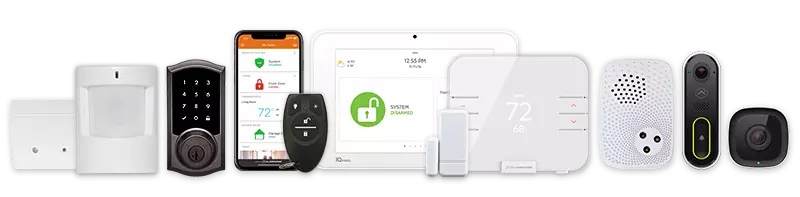
Many business owners treat fire safety as a separate category from security, but in 2026, they are increasingly managed through the same integrated platform. Modern commercial security systems can incorporate smoke detectors, heat sensors, and fire alarm devices alongside intrusion detection and access control.
When everything is connected through a single management interface, response times improve and the risk of gaps in coverage decreases. A system that detects both a break-in and a fire hazard – and alerts the appropriate parties for each – is simply more comprehensive than two separate, siloed systems. It also tends to satisfy insurance requirements more effectively, which can have a real impact on your premiums.
Structured Cabling and Network Installations as the Foundation
None of these advanced systems work well without a solid physical and network infrastructure underneath them. Structured cabling is the backbone that connects cameras, sensors, access control points, intercoms, and cloud interfaces. Poor cabling leads to dropped signals, data loss, and system failures at exactly the moments when reliability matters most.
As businesses upgrade their security technology, investing in properly designed and installed network infrastructure is not optional – it is foundational. This is especially true for larger commercial properties, multi-unit developments, or organizations that are adding new technology layers to existing infrastructure.
Frequently Asked Questions
What is the biggest commercial security system trend for 2026?
The most significant shift is the integration of artificial intelligence into surveillance and intrusion detection. AI enables real-time video content analysis, behavioral analytics, and smarter alert systems that reduce false alarms and improve threat response.
Are cloud-based security systems safe for businesses?
Yes, when properly configured. Cloud-based systems use encryption and secure communication protocols to protect data. The key is working with a provider that understands both physical security and information security, and configures the system with cybersecurity best practices in mind.
How does access control improve regulatory compliance?
Access control systems generate detailed logs of who entered which area and when. This documentation is valuable for audits, insurance claims, and meeting industry-specific compliance requirements around asset and personnel management.
What is automatic number-plate recognition and do I need it?
ANPR uses cameras to read and log vehicle registration plates automatically. It is most useful for businesses with parking lots, loading docks, or vehicle-based operations where perimeter security and vehicle tracking are priorities.
Can I upgrade my existing security system to include these new technologies?
In many cases, yes. True Home Protection works with existing equipment where possible, and offers scalable commercial security solutions that can be expanded over time without requiring a full replacement.
What These Commercial Security System Trends Mean for 2026
The commercial security landscape in 2026 is defined by intelligence, integration, and speed.
Businesses that invest in AI-powered surveillance, smart access control, cloud-connected infrastructure, and unified management systems are not just protecting their property – they are building a more resilient, efficient organization. To explore how these trends can be applied to your specific commercial property, take a closer look at True Home Protection’s commercial security systems and solutions or call +1-800-393-6461 to speak with a local expert.