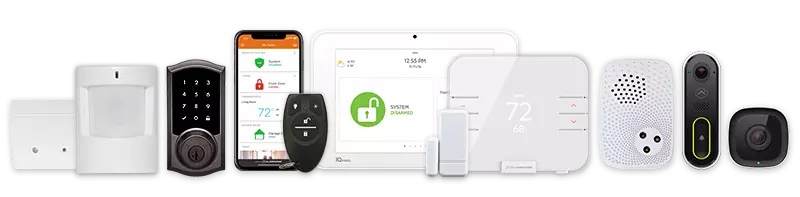
If you run a business in Houston, you already know that protecting your property is not optional – it is essential. Whether you manage a retail shop in Midtown, a warehouse near the Port of Houston, or a multi-office complex in the Energy Corridor, the question is not whether you need security cameras. The question is whether your cameras are actually working hard enough for you.
That is where motion detection alerts change everything.
What Motion Detection Alerts Actually Do for Your Business
Most business owners assume security cameras simply record footage. And technically, they do. But standard recording without motion detection is a passive tool – you only discover what happened after something goes wrong.
Motion detection alerts flip that model entirely. Instead of reviewing hours of footage after an incident, your system notifies you in real time the moment something triggers the camera. That could be an employee entering a restricted area after hours, a stranger approaching your loading dock at 2 a.m., or a delivery left unattended near your entrance. You get notified immediately, on your phone or monitoring dashboard, and you can respond before a situation escalates.
For Houston businesses specifically, this matters. The city covers over 670 square miles and has one of the highest property crime rates among major U.S. metros, according to FBI crime data. Real-time awareness is not a luxury – it is a practical necessity.
Why Houston Businesses Are Upgrading to Smart Commercial Cameras
Houston’s business landscape is diverse, which means security needs vary dramatically from one industry to the next. A restaurant in Montrose has different vulnerabilities than a logistics company in Katy. But across industries, one pattern holds true: businesses that rely on passive recording alone are often the ones calling the police after the fact.
Smart commercial cameras with motion detection give businesses a proactive edge. These systems use intelligent sensors – often combining infrared technology and video analytics – to distinguish between genuine threats and routine movement. That means fewer false alarms triggered by a passing car or shifting shadows, and more accurate alerts when something actually warrants your attention.
Modern systems can also be configured to define specific detection zones. You can instruct the camera to monitor only the area around your safe, your server room door, or your parking lot entrance – not the entire frame. That level of precision dramatically improves alert quality and reduces notification fatigue.
Key Features to Look for in Commercial Motion Detection Cameras
Not all motion-triggered cameras are built for commercial use. Consumer-grade products sold at big-box stores are fine for a home driveway, but they often fall short when deployed in a demanding business environment.
When evaluating commercial security cameras with motion detection for your Houston property, here is what actually matters:
- Image resolution: A minimum of 1080p is standard for commercial use, but 4K cameras are increasingly common and provide the detail needed to identify faces and license plates clearly.
- Night vision and low-light performance: Houston businesses operate around the clock. Your cameras need to perform in complete darkness, not just during daylight hours.
- Wide-angle coverage: Commercial spaces are large. Pan-tilt-zoom (PTZ) cameras or wide-angle fixed lenses reduce the number of units required to cover a full area.
- Alert customization: The ability to set schedules, define detection zones, and choose alert thresholds is critical for reducing noise and staying focused on real threats.
- Cloud and local storage: A combination of both ensures your footage is accessible even if on-site hardware is tampered with or damaged.
- Integration with access control and alarm systems: The most effective setups link cameras to your broader security ecosystem, so a motion trigger can simultaneously lock a door, sound an alarm, or notify a monitoring center.
How Professional Installation Changes the Outcome
There is a significant difference between placing cameras around your building and deploying a thoughtful, coverage-mapped surveillance system. Professional installation accounts for blind spots, lighting conditions, cable management, and network infrastructure – details that determine whether your system actually captures what it needs to capture.
In Houston, where summer heat regularly exceeds 100 degrees and humidity is a constant factor, even hardware selection is impacted by the environment. Commercial-grade cameras designed for outdoor use in Texas weather are built to handle those conditions without degrading over time.
True Home Protection has been working with Houston-area businesses since 2011, and their team understands how local conditions, building layouts, and industry-specific risks influence camera placement and system design. Their advanced video surveillance solutions are built around commercial-grade equipment – not the consumer-level hardware that looks good in a product photo but underperforms in the field.
What Happens When Motion Is Detected
Understanding the alert workflow helps businesses set realistic expectations and configure their systems effectively.
When a camera detects motion in a designated zone, the system can be set to do several things simultaneously: send a push notification to your phone, trigger a recorded clip to upload to the cloud, alert a professional monitoring center, and activate on-site indicators like lights or sirens. The response chain is configurable and depends on your operational needs.
For businesses with multiple locations across Houston – or multi-site operations statewide – centralized monitoring dashboards allow one team to oversee alerts from every property in real time. This is especially valuable for enterprise clients managing facilities across different zip codes or regions.
Addressing Common Questions About Commercial Motion Detection Systems
How many cameras does my business need?
This depends on your square footage, entry points, interior layout, and what you are trying to protect. A professional site assessment is the most reliable way to determine the right number and placement. Most commercial properties require more units than business owners initially estimate.
Will my system work if the internet goes down?
Commercial-grade systems typically include local storage options, like NVR (network video recorder) units, so recording continues even during an internet outage. Alerts that rely on cloud connectivity will pause, but footage is not lost.
Can I access my cameras remotely?
Yes. Modern commercial surveillance systems support remote access through secure mobile apps and web portals. You can view live feeds, review recorded clips, and manage alert settings from anywhere with a connection.
Is professional monitoring necessary?
It depends on your risk level and operational capacity. Some businesses self-monitor effectively using app-based alerts. Others, particularly those with high-value inventory or after-hours vulnerability, benefit from 24/7 professional monitoring that can dispatch responders when you are unavailable or unreachable.
Protecting Your Houston Business Starts With the Right System
Security cameras with motion detection alerts are not a set-it-and-forget-it solution. They are a living part of your business infrastructure – one that requires thoughtful design, proper installation, and ongoing attention to stay effective.
Houston businesses deserve systems built for real commercial demands, not consumer compromises. True Home Protection offers no-contract options, transparent pricing, same-day service availability, and a limited lifetime warranty on their equipment – so you are not locked into a relationship that no longer serves your needs.
If protecting your Houston property is a priority, the next step is a conversation with a team that actually understands your environment. Call True Home Protection at +1-800-393-6461 to schedule a site assessment and find out what a properly designed commercial surveillance system looks like for your specific property.