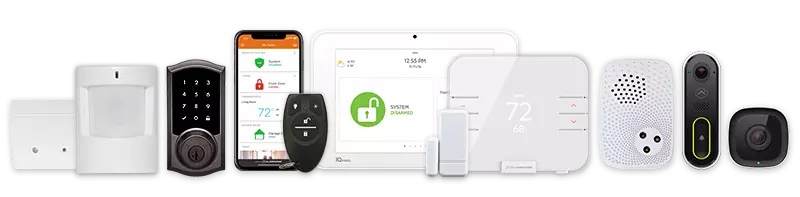
Crime prevention has come a long way from motion-sensor lights and deadbolt locks. Across the Dallas-Fort Worth metroplex, homeowners and business owners are turning to a smarter layer of protection – AI-powered surveillance systems that don’t just record what happens, but actually help stop it before it escalates.
If you’ve ever wondered whether the cameras on your property are doing as much as they could, the answer is probably no. Here’s what modern AI surveillance actually does, why it matters in DFW specifically, and how to make the right call for your property.
What Makes AI Surveillance Different From Traditional Cameras
A standard security camera is essentially a passive tool. It records footage, and if something bad happens, you – or law enforcement – review the video afterward. That’s useful, but it’s reactive by nature.
AI-powered surveillance systems work differently. They analyze video in real time, recognize patterns, and flag unusual activity as it happens. Instead of waiting for a crime to be reported, the system can alert you the moment something seems off – a person lingering near your vehicle at 2 a.m., a vehicle parked in a restricted area, or motion detected in a zone that should be empty after business hours.
This shift from passive recording to active monitoring is a meaningful one, especially in a region as large and varied as DFW.
Why DFW Specifically Calls for Smarter Security
The Dallas-Fort Worth area is one of the fastest-growing metros in the United States. That growth brings real benefits, but it also brings challenges. Larger populations, expanding suburbs, new commercial corridors, and busier neighborhoods all create more opportunities for property crime to go undetected.
According to the FBI’s Uniform Crime Reporting data, Texas consistently ranks among the states with high volumes of property crime, and urban metros like DFW are not immune.
Burglary, auto theft, and commercial break-ins are among the most common issues residents and business owners report.
Traditional security measures simply can’t keep pace with that scale. AI surveillance can monitor multiple zones simultaneously, operate effectively in low light, and send real-time alerts without requiring someone to sit in front of a monitor all day.
Key Features of AI-Powered Surveillance Worth Understanding
Not all AI-enabled cameras are built the same. When evaluating a system for your home or business, a few core capabilities make a real difference.
- Behavioral analysis goes beyond detecting motion. It recognizes the difference between a dog wandering through the yard and a person crouching near a window. The system is trained to identify behaviors – not just objects – which dramatically reduces false alarms.
- Facial and license plate recognition can identify repeat visitors, flag vehicles that have been associated with incidents on your property, or simply log who enters and exits a gated area. For businesses managing employee access or tracking delivery schedules, this is particularly useful.
- Perimeter intrusion detection allows you to define virtual boundaries around your property. If someone crosses that line at a time they shouldn’t, you get an alert – not after reviewing 12 hours of footage, but immediately.
- Integration with alarm systems is where things get especially practical. When the surveillance system communicates directly with your alarm and monitoring service, response times drop significantly. The monitoring center can see what triggered an alert rather than guessing, and that leads to more accurate, faster responses.
AI Surveillance for Homes in DFW
For homeowners, the appeal of AI surveillance often starts with simplicity. You want to know your family is safe, and you want to stop worrying about what might be happening outside while you sleep.
Modern residential AI camera systems can cover entry points, driveways, backyards, and garages with enough intelligence to tell the difference between a delivery driver and someone who doesn’t belong. Many systems integrate directly with your smartphone, sending clips or alerts only when the AI determines something warrants your attention.
This matters because alert fatigue is real. A system that cries wolf every time a leaf blows across the driveway quickly gets ignored. Systems with built-in behavioral analysis are far more precise, which means when you do get an alert, it’s worth paying attention to.
For a comprehensive layer of protection, pairing AI cameras with residential video monitoring gives you the best of both worlds – smart detection on-site and professional eyes watching over your property when you can’t.
AI Surveillance for Businesses and Commercial Properties
The stakes are higher for businesses, and the complexity is greater too. You’re not just protecting a single building – you may be managing multiple entry points, employee areas, parking lots, storage facilities, and customer-facing spaces all at once.
AI surveillance at the commercial level often includes features like occupancy monitoring, anomaly detection in inventory areas, and automated alerts for after-hours activity. A retail business in Fort Worth, for example, might use AI-enabled cameras to monitor for shoplifting behaviors without requiring constant staff attention.
A warehouse in Dallas might rely on perimeter detection to flag unauthorized vehicle access before it becomes a break-in.
For business owners serious about layering their protection, exploring business video surveillance systems designed for commercial environments is a logical starting point.
Commercial-grade equipment handles weather extremes, operates across larger coverage areas, and integrates with access control systems in ways that consumer-grade cameras simply can’t match.
Frequently Asked Questions
Does AI surveillance actually prevent crime, or just record it?
Both, ideally. Visible cameras with real-time alert capabilities serve as a deterrent – most opportunistic criminals will move on when they spot active surveillance. But when deterrence fails, the immediate alert and monitoring capabilities mean law enforcement can be notified while an incident is still in progress, rather than hours later.
Is AI surveillance legal in Texas?
Yes. Texas law generally permits surveillance on your own property. For commercial properties, there are some considerations around employee privacy in certain spaces, but a professional installation company can walk you through the compliance requirements for your specific setup.
How does AI surveillance handle privacy concerns with neighbors?
Properly installed systems are configured to monitor your property boundaries. A skilled installation team will angle cameras and define detection zones to minimize capture of neighboring properties, which is both a privacy best practice and a legal consideration in most municipalities.
Can AI cameras work with a system I already have?
In many cases, yes. Depending on your existing infrastructure, newer AI-enabled cameras can be integrated with existing DVRs or NVRs, or the system can be upgraded selectively rather than replaced entirely.
Making the Right Security Decision for Your DFW Property
AI-powered surveillance is not a luxury add-on anymore – it’s becoming the baseline expectation for anyone serious about crime prevention. The technology has matured, the costs have come down, and the difference in real-world effectiveness compared to traditional cameras is substantial.
Whether you’re a homeowner in Frisco trying to keep your family safe or a business owner in Dallas protecting your livelihood, the right surveillance system is one that works intelligently, integrates seamlessly, and gives you actionable information when you actually need it.
True Home Protection has been helping Texas residents and businesses build reliable security setups since 2011. If you’re ready to see what smarter surveillance looks like on your property, call +1-800-393-6461 to get started with a setup designed around your specific needs – no contracts, no hidden fees, and equipment that actually does the job.