You’ve probably walked through a door that opened automatically as you approached from inside – no button, no key, no fumbling. That smooth exit is not magic. It is the work of a request-to-exit device, or REX for short.
Most people never think about it. But in any serious access control setup, this small component plays a big role in keeping things safe and running smoothly.
What Does a Request to Exit Device Actually Do?
A REX device signals your access control system to unlock a door when someone wants to leave – without triggering an alarm or forcing the door open. It is the inside half of a secure door setup.
On the outside, you might need a credential like a keycard or PIN. On the inside, the REX device handles the exit automatically or with a simple push-button press.
This matters most in buildings where doors are controlled by an electric strike or magnetic lock. Without a REX, every exit could set off an alert.
The Two Main Types of REX Devices
Passive Infrared and Motion-Based Sensors
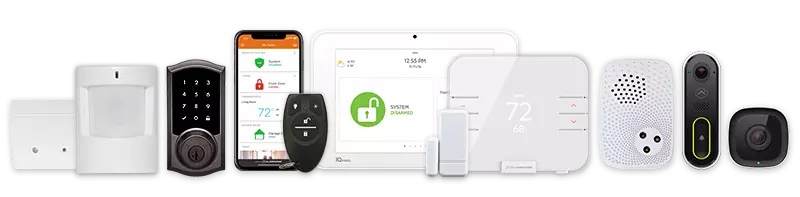
The most common type uses a passive infrared sensor – often called a PIR or motion detector – to detect body heat as someone approaches the door. These are sometimes called infrared sensors because they read thermal signatures, not just movement.
Microwave sensors are another option. Instead of heat, they use radio frequency to detect motion, which makes them useful in environments where temperature variation could confuse a standard infrared unit.
Push-Button REX Devices
Sometimes simpler is better. A push-button or switch mounted on the wall near the door lets someone manually request exit. Press the button, the system receives the signal, and the door unlocks.
These are common in offices, medical facilities, and any location where a hands-free sensor might not be practical.
Where REX Devices Are Used
Any commercial space with electronically locked doors typically needs a REX device somewhere in its access control plan. A few common examples:
- Office buildings and corporate suites, where employees badge in but need to exit freely, especially near stairwells and lobby doors.
- Warehouses and distribution centers, where foot traffic and equipment move through the same secured doors all day.
- Healthcare facilities, where controlled areas like medication rooms or restricted wings still need to allow quick, unimpeded exit.
- Multi-tenant and retail properties, where shared entrances are secured after hours but still need a safe way for staff to leave.
- Schools and government buildings, where doors are often locked from the outside for security but must never trap anyone inside.
The common thread: wherever a door locks electronically, a REX device makes sure people on the inside can still get out without setting off alarms or needing a credential they may not carry.
REX Devices vs. Other Exit Hardware
It’s easy to confuse a REX device with other hardware that also affects how people exit a secured door. Here’s how they differ:
- Panic bars and crash bars are mechanical hardware, not access control components. Pushing the bar releases the door directly, whether or not the access control system is even involved.
- Push-to-exit buttons are a type of REX device. They are the manual version, giving someone a physical button to press instead of relying on a motion sensor.
- Delayed egress systems intentionally add a short delay, often in the range of 15 to 30 seconds, before releasing the door. These show up in higher-security settings, like retail loss prevention or healthcare units, where a brief pause is acceptable.
- Magnetic lock release buttons unlock a maglock but don’t always integrate with the broader access control system the way a true REX device does.
Understanding these differences matters when you are speccing out a new door or troubleshooting an existing one. Not every exit device is a REX device, even when they look similar at first glance.
Why Access Control Systems Depend on REX
An access control system without a proper REX setup is incomplete. The sensor or button creates a clear signal – it tells the system “someone is leaving intentionally,” so alarms stay quiet and logs stay accurate.
At True Home Protection, our access control systems for business and enterprise use are built with this kind of full-loop thinking from the start.
REX Devices and Fire and Life Safety Codes
REX devices are not just a convenience. In most jurisdictions, building and fire codes require that anyone inside a space can exit without a key, a code, or specialized knowledge, even if the door is secured from the outside. A door that locks people in without a compliant way out can be a life-safety violation, and it can put a business at risk during an inspection or, worse, an actual emergency.
A properly wired REX device is one of the most common ways to meet this requirement on an access-controlled door. It is also one of the details fire marshals and code inspectors check during walkthroughs.
Code requirements vary by jurisdiction and by occupancy type, so it’s worth having an access control system reviewed by a professional familiar with local fire code, rather than assuming any door setup automatically qualifies.
How to Tell If Your Door Needs a REX Device
Not sure whether a specific door in your building needs one? A few signs point to yes:
- The door uses an electric strike, magnetic lock, or other electrified locking hardware.
- People need to exit the space without a badge, PIN, or key.
- The door currently sounds an alarm or logs a forced-entry event every time someone leaves.
- Fire or building code requires free egress from that space.
- The door is part of an emergency exit path.
If any of these apply, that door almost certainly needs a REX device as part of its access control setup. When in doubt, it’s worth having a professional walk the building and confirm which doors are covered and which ones might have gaps.
Common REX Installation Mistakes to Avoid
A REX device only works as well as its installation. A few mistakes come up often:
- Mounting the sensor too high or too low, so it misses people approaching at a normal walking pace.
- Placing a motion-based sensor near HVAC vents or windows, where temperature changes can cause false triggers or missed detections.
- Wiring the REX to bypass the door alarm entirely instead of coordinating it with the access control panel, which can create blind spots in activity logs.
- Skipping the REX device on doors that were locked down for security after the original design, without accounting for the exit requirement.
- Failing to test the REX device after any change to the door hardware, panel programming, or building layout.
Working with someone who understands both access control and code requirements helps avoid these issues before they become a problem during an inspection or an emergency.
Frequently Asked Questions
What is a REX device used for?
A REX (request-to-exit) device tells an access control system that someone is leaving a secured door on purpose, so the door unlocks and the alarm or forced-entry log stays quiet.
Is a request-to-exit device required by code?
In most cases, yes. Some form of free egress is required by fire and building codes for spaces with electrified locks, and a REX device is one of the standard ways to meet that requirement. Requirements vary by jurisdiction, so it’s worth confirming with a local code official or a security professional.
Can a REX device be bypassed or defeated?
Like any security component, a REX device can be misused if it’s poorly placed or improperly wired, which is one more reason correct installation and periodic testing matter.
What’s the difference between a REX device and a push-to-exit button?
A push-to-exit button is one type of REX device, the manual version. Motion-based sensors are the automatic version. Both send the same basic signal to the access control system.
Does every commercial door need a REX device?
Not every door, but any door with electrified locking hardware that people need to exit through generally does. Doors that only use mechanical hardware, like a panic bar, may not need one.
The Bottom Line on Request-to-Exit Devices
A request-to-exit device is a small but essential part of any access control system. Whether it is a passive infrared sensor, a microwave-based detector, or a simple push-button switch, REX devices keep your doors smart, secure, and alarm-free from the inside out. If your Texas business is running a door system without one – or if you are unsure how your current setup works – reach out to True Home Protection at +1-800-393-6461 for a professional assessment.