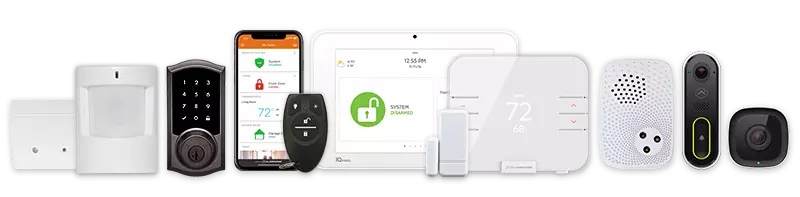
Running a business across multiple locations is no small feat. You are managing staff, operations, inventory, and customer experience all at once, and learning how to choose a commercial security system for multiple locations adds to that list, and things get complicated fast. A single weak point at any one of your locations can expose your entire business to theft, vandalism, liability, and downtime you cannot afford.
The challenge isn’t just learning how to choose a commercial security system for multiple locations; it’s finding one that scales across every location you operate without leaving unseen gaps.
This guide breaks down how to approach that decision clearly and confidently.
Start With an Honest Assessment of Your Security Needs and Vulnerabilities
Before you look at any equipment or pricing, you need to understand what you are actually protecting. This starts with a risk assessment at each location.
Walk through each property and ask the hard questions. Where are the entry and exit points?
What assets are stored on-site? Are there areas with limited visibility or poor lighting? What are the hours of operation, and is the building ever left unattended?
Your security needs and vulnerabilities will vary significantly from one site to another, even if your business model is identical at each location. A retail space in a high-traffic area has different exposure than a warehouse on the outskirts of town. Treating them the same is one of the most common and costly mistakes business owners make.
Understand the Types of Commercial Security Systems Available
Once you know what you are up against, you need to understand what tools are available.
There are several types of commercial security systems, and the best setup for your business will likely involve more than one.
Video Surveillance and CCTV
Closed-circuit television, or CCTV, gives you eyes on your property around the clock. Modern business video surveillance systems go far beyond simple recording. They offer motion detection, real-time alerts, cloud storage, and analytics that can actually help you run your business more efficiently.
A well-placed security camera does two things: it deters bad behavior before it happens, and it gives you documentation when something goes wrong. For multi-location businesses, the ability to monitor all sites from a single dashboard is not a luxury. It is a necessity.
Access Control Systems
An access control system determines who gets in, where they go, and when. Instead of relying on physical keys, which get lost, copied, or handed off without your knowledge, access control uses keycards, PIN codes, biometrics, or mobile credentials.
For businesses managing multiple locations, commercial access control solutions allow you to set different permission levels for different employees across different sites. A regional manager might have access to all locations. A part-time employee at one store does not need access to your main office server room. That kind of granular control is what separates a reactive security approach from a proactive one.
Access control also gives you a detailed log of who accessed what and when. That data is invaluable if a security incident ever occurs.
Alarm Systems and Intrusion Detection
An alarm system is often the first line of defense most people think of, and for good reason. An intrusion detection system monitors for unauthorized entry using door and window sensors, motion detectors, and glass-break detectors.
For commercial properties, a monitored alarm system means that when something triggers, a response is initiated immediately, even if no one is on-site. This 24/7 service component is critical for after-hours protection, especially at locations that store valuable equipment, merchandise, or sensitive data.
Perimeter Security
Perimeter security covers the outer boundaries of your property before anyone even reaches a door. This includes fencing, exterior lighting, surveillance cameras positioned at entry points, and vehicle barriers where applicable.
Many business owners overlook perimeter security because it feels less technical than other components. But stopping a threat at the boundary is always better than dealing with it once someone is already inside.
Choosing the Right Commercial Security System for Multiple Locations
Here is where things get strategic. Choosing a commercial security system for multiple locations is not just about choosing good equipment. It is about choosing a system that works together.
Prioritize Integration
An integrated security approach means your video security, access control, alarm system, and other security components communicate with each other. When a motion detector triggers after hours, your cameras should automatically shift focus to that area. When access is denied at a door, your system should log it and alert the right person.
Integration with other security tools also extends to your existing infrastructure. If you already have structured cabling or a network backbone in place, your new system should be designed to work with it, not around it. True Home Protection offers enterprise structured cabling services that ensure your security infrastructure is built on a solid, reliable foundation.
Look for Scalability
A scalable system is essential when you are operating across multiple locations or planning to grow. You do not want to invest in a system today that cannot accommodate a new site next year without a full overhaul.
Cloud computing has made scalability significantly more accessible. Cloud-based security management platforms let you add locations, users, and devices without replacing your entire setup. They also reduce the need for on-site servers at every location, which cuts both complexity and cost.
Centralized Security Management
Managing security at multiple locations without a centralized platform is exhausting and error-prone. You need a single pane of glass that shows you the status of every site, every alarm, and every access event in real time.
Multi-location enterprise security management platforms allow security teams to monitor, respond, and report across all properties without being physically present at each one. This matters for data management, compliance, and the overall security posture of your business.
Key Factors to Evaluate Before System Installation
Choosing the right commercial security system for multiple locations also means evaluating factors beyond the hardware itself.
- Reliability and Backup Systems – Ask any provider about redundancy. What happens during a power outage or internet failure? A reliable security system should have backup power and fail-safes that keep it operational during downtime.
- Security and Privacy Compliance – Depending on your industry, you may have specific security standards and data security obligations. Make sure the system you choose aligns with those requirements. Surveillance that captures customer or employee footage must be handled in a way that respects privacy and meets applicable regulations.
- Security System Cost and Total Investment – A security system is an investment, and it should be evaluated as one. Look beyond the upfront cost of security equipment. Factor in monitoring fees, maintenance, system upgrades, and potential savings on business insurance premiums that often come with documented security measures.
- Vendor Support and Response Time – Installing a security system is not the end of the relationship. You need a security provider that offers ongoing support, fast response when issues arise, and a team that understands the unique security requirements of multi-location businesses.
True Home Protection offers commercial security systems for businesses with no hidden fees, no long-term contracts, and same-day service, which means you are not left waiting when something goes wrong.
Do Not Overlook the Human Element
Technology is only part of a comprehensive security strategy. The effectiveness of your security system also depends on how your team uses it.
Security personnel need to understand the system they are working with. This means training staff on access control procedures, alarm protocols, and how to respond to security issues.
Even the best security setup can be undermined by poor policy or a lack of awareness.
Building security culture is just as important as building security infrastructure. Make sure your team knows what to do when an alert security notification comes through, who to contact, and how incidents are documented.
Build a Smarter, Layered Security Strategy
The most effective approach to business security is layered. No single component provides complete protection. Combining physical security, video surveillance, access control, alarm systems, and perimeter security creates overlapping layers that are far harder to defeat.
For businesses with multiple locations, that layered approach needs to be consistent across every site. Gaps in one location become vulnerabilities for the entire organization. Think of your overall security posture not as a collection of individual setups, but as one interconnected system spanning every property you own or operate.
When you are ready to choose the best commercial security system for multiple businesses, start with a clear understanding of your risks, invest in integrated technology, choose the right partners, and build a system that grows with you.
Conclusion
Choosing the right business security system across multiple locations requires more than picking good equipment. It demands a strategic, layered approach that addresses unique risks at every site. True Home Protection helps Texas businesses build reliable security solutions that scale – from CCTV and access control to enterprise-level management. Whether you are protecting one location or many, the right partner makes all the difference.
Ready to strengthen your security? Contact True Home Protection at 1-800-393-6461 or visit us to get started today.