When it comes to choosing a home security system, one of the most pressing questions is whether to go with a self-monitoring setup or opt for professional monitoring. It’s not always an easy decision. After all, the safety of your home and family is on the line.
If you’re torn between these two options, don’t worry, you’re not alone. Let’s break down the differences in plain, clear terms and explore how each monitoring option stacks up when it really matters.
What Is a Home Security System?
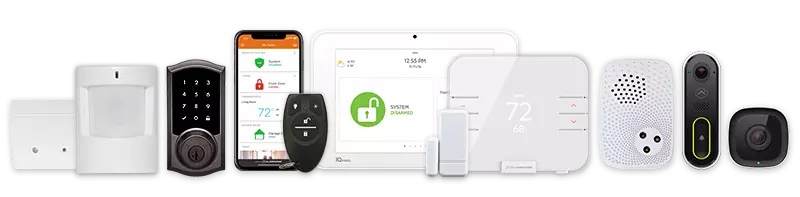
A modern home security system consists of devices like door and window sensors, motion detectors, smart cameras, detectors for smoke and carbon monoxide, and an alarm device.
These systems can connect to a central monitoring service or allow you to monitor alerts and status through a mobile app.
Whether you’re building a smart home or adding safety to a new property, the type of monitoring you choose plays a crucial role in how effective your system will be during an emergency.
Understanding the Options: Self-Monitoring vs Professional Monitoring
What Is Self Monitoring?
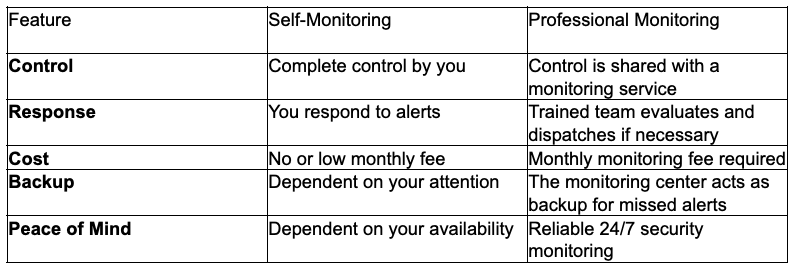
With a self-monitored home security system, you use your smartphone, tablet computer, or other smart device to monitor your home. When a sensor is triggered, your mobile app sends you an alert. It’s then up to you to assess the situation and decide if you need to contact emergency services.
Self-monitoring home security is appealing to homeowners who prefer more control and flexibility.
You might choose to self-monitor your system if you:
- Want to avoid a monthly fee
- Prefer direct control of your home system
- Are tech-savvy and always have your phone nearby
- Have a good understanding of your smart home devices
But self-monitoring does come with real responsibilities.
What Is Professional Monitoring?
Professional monitoring means your home security system is connected to a monitoring center manned 24/7 by trained security personnel. When an alarm is triggered, the monitoring company receives the signal and immediately begins to monitor your home. They will attempt to reach you, and if they can’t, they will dispatch emergency services.
Professionally monitored security systems offer a deeper layer of protection and peace of mind, particularly if you’re not always available to respond to alerts.
Professional monitoring services may include:
- Instant connection to a trained response team
- Automatic dispatch to police, fire, or emergency medical services
- Constant home monitoring, even when you’re away or asleep
Key Differences Between Self-Monitoring and Professional Monitoring
The Benefits of Self-Monitored Security Systems
Self-monitored security systems, like those from SimpliSafe or integrated smart home brands like Google Nest and Ring Alarm, are ideal for homeowners who are comfortable with modern tech and want to avoid ongoing costs.
Advantages of a self-monitored system:
- Lower cost in the long run (no monthly monitoring)
- Control your alarm system and alerts through your mobile app
- Easily integrated with other smart home devices like door locks, doorbells, and security cameras
- Great for DIY security system setups
Some of the best self-monitored home security systems let you create custom alerts and automation, and you get to decide when and how to act, whether you disarm the system, take video doorbell action, or initiate phone calls.
Common Self-Monitoring Options
- Receive push notifications when a sensor is triggered
- Use live video from your camera to assess the situation
- Control lights, locks, and devices remotely to deter burglars
- Store security footage on the cloud or a local drive
However, there are cons of self-monitoring to keep in mind.
The Cons of Self-Monitoring
Even the best self-monitored security system has its drawbacks. When you’re the only one monitoring your system, mistakes can happen.
Here’s what you need to watch out for:
- You might miss an alarm if your phone is off or you’re in a meeting
- If a sensor goes off at 2 AM, will you respond quickly?
- In a real emergency, like a fire or burglary, seconds matter. Professional monitoring can act faster than a distracted homeowner
Leaving your home vulnerable while you’re away or unavailable is one of the biggest cons of self-monitoring.
The Advantages of Professional Monitoring
Professionally monitored home security handles emergency events without relying on you to be available. If the alarm is triggered, your system automatically alerts the monitoring center. From there, trained staff assess the threat level and dispatch police, fire, or ambulance services as needed.
Why do many homeowners choose professional alarm monitoring?
- 24/7 supervision by trained security experts
- Faster emergency response thanks to immediate professional action
- Ideal for families, seniors, or frequent travelers
Many systems that offer professional monitoring also support backup features like cellular communication and battery power in case of electrical outages.
Alarm Professional Monitoring Features You Should Know
- Tiered professional monitoring plan options
- Automatic alerts to emergency services during smoke or CO (carbon monoxide) detector activation
- Two-way communication with a monitoring center via control panels or smart speakers
Some systems are often designed with built-in fail-safes to reduce the chance of a false alarm sending responders unnecessarily.
Which Monitoring Option Offers the Best Security?
It depends on your situation and comfort level. Still, many professionals recommend erring on the side of redundancy and reliability.
Choose self-monitoring if:
- You’re almost always near your phone
- You want full control of your home system
- You’re okay with the risk of handling emergencies yourself
Choose professional monitoring if:
- You want true peace of mind
- You want someone else to respond while you’re away, asleep, or unable
- You’re concerned about missing an alert when time matters
Your level of security depends heavily on how actively and consistently you monitor your system, if you’re not 100% confident in doing that yourself, opting for professional security monitoring is safer.
Some homeowners go with a hybrid approach: allow for self-monitoring most days and enable professional monitoring for travel or extended absences.
Professional Monitoring vs Self-Monitoring: Final Thoughts
When comparing self-monitoring vs professional monitoring, think about your daily routine, responsibilities, and what gives you peace of mind. While DIY setups and smart home gadgets offer lots of flexibility, the protection a monitored home security system offers goes beyond cool features.
If you want to secure your home with complete confidence, consider a system that can scale with your needs from self-monitoring today to professional monitoring down the road.
At True Home Protection, we offer residential alarm monitoring services that deliver the peace of mind you’re looking for. Whether you’re installing a new security alarm or upgrading your current setup, our experts are here to help every step of the way.
Security System FAQ
Do professionally monitored systems contact emergency services directly?
Yes. Once an alarm goes off and your system sends an alert to the monitoring center, the trained staff can dispatch emergency responders if the threat is confirmed.
Can I switch between self-monitoring and professional monitoring?
Many modern systems, like SimpliSaf,e offer flexible plans that allow switching between self-monitoring and professional monitoring services as your needs change.
What happens if I miss an alert while self-monitoring?
If you’re unavailable to assess the situation, the danger could escalate without action. This is a key downside to self-monitored home security systems.
Are self-monitored systems reliable?
Yes, if you consistently monitor your system and respond quickly to alerts. Just remember that systems that are monitored by professionals offer an extra layer of security in critical moments.
What’s the best home security system for a family?
That depends on your lifestyle, but professionally monitored home security systems often provide more comprehensive coverage, particularly important if you have children or elderly residents in the home.
Ready to Take the Next Step?
Whether you’re leaning toward installing the best self-monitored home security systems or opting for the in-depth coverage of professional monitoring, make sure your decision fits your lifestyle and gives you the confidence that your home is truly protected.
Not quite sure yet? Our team at True Home Protection is happy to help walk you through your options, so you can feel safe and sure about the monitoring option that’s best for your Texas home. Reach out today.
Stay safe, stay informed, and follow us for more home safety advice tailored to Texas homeowners.