
When you walk into a room, and the lights turn on, that’s typically a sensor at work. But what type? In the world of smart home automation, understanding the difference between a presence sensor and a motion sensor can make all the difference in optimizing your home’s security, lighting, and energy efficiency.
So, let’s break down what makes these sensors tick, how they work, and which one might be better for your home setup in Texas.
Motion Sensor vs Presence Sensor: What’s the Real Difference?
The terms often get used interchangeably, but there are important distinctions between a motion sensor and a presence sensor.
Motion Sensor: The Basics
A motion sensor detects movement within its field of view. Most traditional motion sensors are designed to sense large changes – for instance, someone walking into a room.
They typically use Passive Infrared (PIR) technology, sensing heat changes caused by moving bodies. These are great in hallways or doorways where you want to track entry or exit.
PIR Motion Sensor Highlights:
- Detects movement based on changes in infrared radiation
- Ideal for detecting people walking
- More prone to false triggers if placed poorly
- Consumes less power
Presence Sensor: A Closer Look
A presence sensor, sometimes referred to as a true presence sensor, goes a step further. It can detect even small movements like breathing or hand gestures, making it much more sensitive.
Today’s presence sensors rely on technologies such as mmWave radar or ultrasonic sensing to pick up on subtle movements that PIR sensors might miss.
Key Differences Between the Two
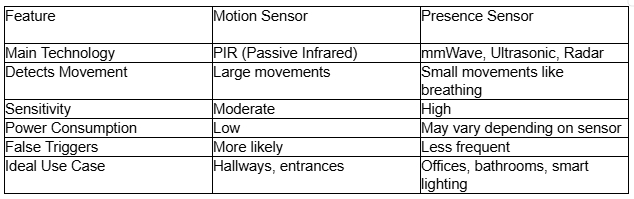
Understanding these key differences will help you design better home automation strategies using either device, or even combine both for best results.
How Motion Sensors Work: The PIR Advantage
Motion sensor devices, especially PIR sensors, are common in everything from security alarm systems to bathroom lighting.
Here’s how PIR motion sensors work:
- They detect human presence based on infrared radiation emitted by warm objects.
- When someone walks through the detection area, the PIR sensor detects a change and triggers an action, like turning on a light or sending an alert.
But here’s the catch: motion sensors struggle when the person is sitting still. So, the sensor might think the room is empty when it’s not. That’s where a presence sensor really shines.
How Presence Sensors Work
Unlike motion sensors, presence sensors are highly sensitive. They leverage mmWave (24GHz or higher) radar, ultrasonic waves, or other methods to detect human occupancy based on minute changes in surroundings.
A presence sensor like the Aqara FP2 uses mmWave radar to detect small movements like breathing, even when you’re not moving much. That helps with presence detection in situations where traditional motion detection would fall short.
Smart Features of Presence Sensors
- Can define specific zones within a room
- Works well in bathrooms or offices where someone could be sitting still
- Great for home automation and lighting control systems
- Less prone to false triggers compared to basic PIR sensors
Motion or Presence: Which Sensor Is Better for Smart Homes?
It depends on your use case. Here’s how to think about motion sensor vs presence sensor for your smart home setup:
Choose Motion Sensors When:
- You want a low-cost solution
- You only need to detect motion at entry or exit points
- You are implementing basic security systems or lighting automation, like turning lights on when someone enters the room
Choose Presence Sensors When:
- You want to detect even small movements
- You’re concerned with energy efficiency and don’t want lights turning off while someone is still present
- You’re working with advanced smart platforms like Home Assistant, SmartThings, or Apple Home
- You want advanced automation like adjusting the HVAC when someone’s in the room
Combining Presence and Motion Sensors for Complete Coverage
In many homes, using both presence and motion sensors together creates the best result.
While motion sensors can trigger alerts and lighting upon entry, presence sensors ensure lights stay on while you’re still present and breathing.
Think about it like this:
- Motion sensor detects activity when someone enters
- Presence sensor verifies occupancy with subtle movements
- The system can keep the lights on or adjust the room temperature until you leave the room
This layered approach enhances both effectiveness and energy savings.
Popular Devices to Consider
Looking to add sensors to your Texas home? Here’s a quick look at popular, trusted brands:
- Aqara Presence Sensor FP2: Uses mmWave for precise zoning and occupancy tracking. Works with platforms like Home Assistant, Apple Home, and more. Integrates via Aqara Zigbee or Thread.
- Sonoff PIR Motion Sensor: Budget-friendly choice for basic motion detection, ideal for rooms or hallways.
- SmartThings-compatible devices: Work with both PIR and presence sensors. Easily integrated into broader lighting or security systems.
When Should You Use a Presence Sensor Like Aqara FP2?
Presence sensors are best for:
- Rooms where people stay still (living rooms, bathrooms, bedrooms)
- Areas where energy efficiency is a concern
- Smart homes where latency and precision matter
- Avoiding the annoyance of lights turning off when someone is sitting still or working quietly
They can also offer better spatial mapping. For instance, the Aqara FP2 can recognize specific zones in a single room, triggering actions only when someone enters those areas.
So, Presence Sensor vs Motion Sensor: Which Should You Choose?
Still debating the right sensor for your setup?
Here’s a quick breakdown of scenarios and preferred sensor types:
- You want to detect large movement quickly: Motion sensor
- You want to monitor subtle movements like breathing: Presence sensor
- Your goal is smart energy savings and automation: Presence sensor
- You need to cover walkways or doors in a security system: a motion sensor or motion detector
If you’re considering upgrading or expanding your home security systems for residences, integrating both sensor types offers flexibility and better control over lighting, HVAC, and alerts.
Final Thoughts: Pick What Works Best for Your Space
Choosing between a motion sensor and a presence sensor really comes down to how you use your space. For most Texas homes, combining both will deliver the best balance of reliability, automation, and comfort.
Want to explore more options for securing and automating your home? Check out our easy-to-install home security systems for residences. They’re designed with your safety and convenience in mind.
Here’s the bottom line: For walk-through areas, a motion sensor would work great. For rooms where detecting presence is crucial, go with a true presence sensor.
Get smart. Get secure. Let your home do the work. Call us today.