Is Keyless Entry Safe for my Home Security?
When you’re thinking about updating your door lock, a keyless option might seem like an obvious upgrade. No more digging for your house key, no fear of losing it, and you can even let guests in while you’re away. But is keyless entry safe for home use?
At True Home Protection, we understand the excitement and concerns many homeowners face when considering a new lock system.
We get questions all the time about whether keyless door locks are truly secure. Let’s take a detailed look at how these modern locks work, the possible risks, and whether they can improve your home’s overall security.
Understanding How Keyless Entry Door Locks Work
A keyless entry system replaces the traditional lock and key with digital access methods.
Instead of inserting a physical key, you might:
- Enter a personal identification number (PIN) on a keypad
- Use a smartphone app to lock and unlock your door
- Scan a fingerprint or use facial recognition
- Tap a Bluetooth-enabled keychain or device
- Use voice control through your smart home system
These smart door locks often connect to your home Wi-Fi or Bluetooth to communicate with authorized devices like phones or voice assistants. This allows for advanced features like remote locking and unlocking, real-time alerts, and access for a limited time via temporary access codes.
What Types of Keyless Entry Systems Are Available?
Knowing the different types of keyless entry can help you decide what’s right for your home:
Keypad Door Locks
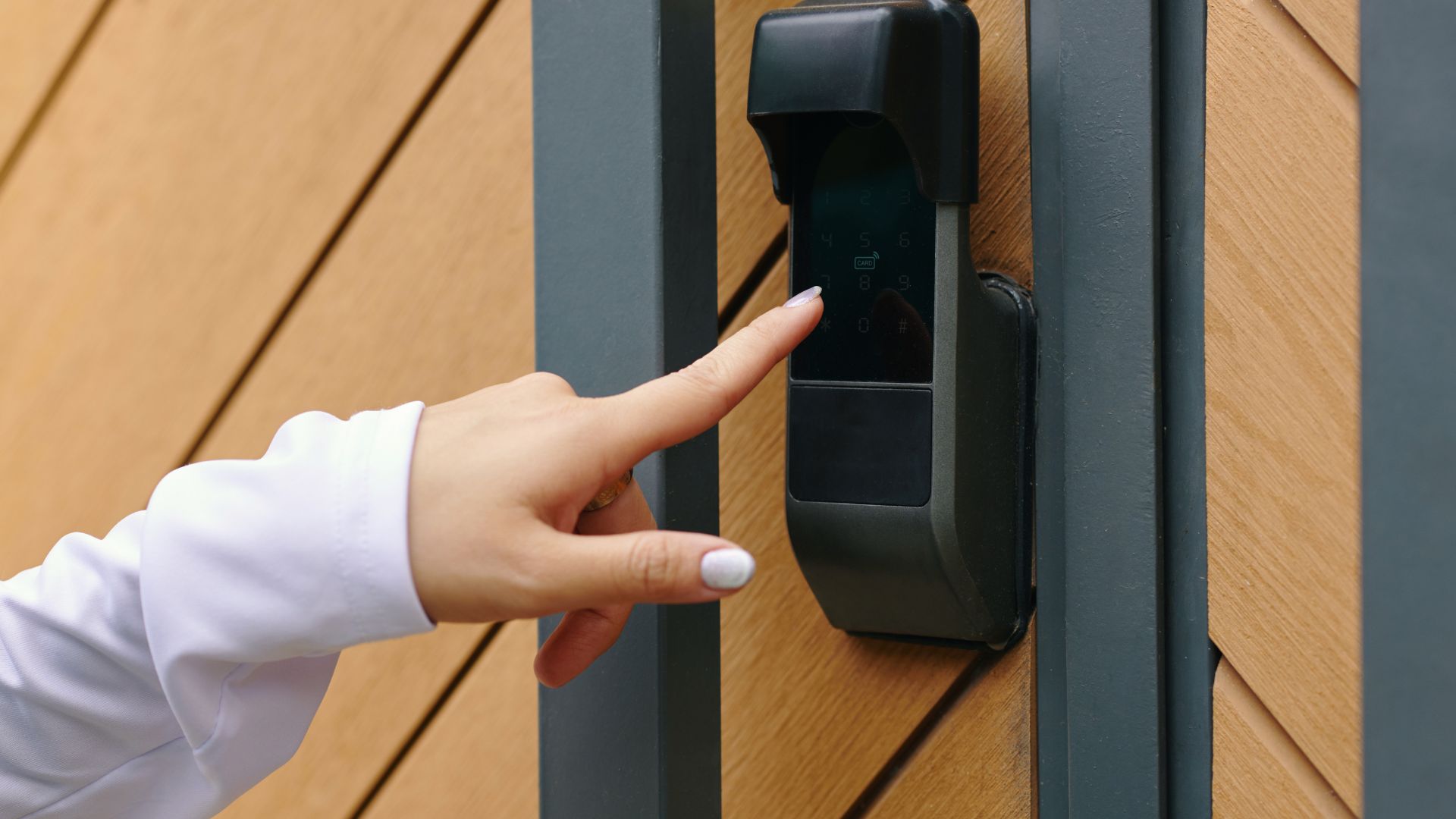
You input a code on a keypad to enter your home. Some models allow multiple unique codes, which can be great for giving temporary access to visitors or service providers.
Smart Locks with Apps
A smart lock pairs with your smartphone using Wi-Fi or Bluetooth. Through the mobile app, you can lock and unlock the door, track who’s coming and going, and manage users. Many models also offer two-factor authentication for extra layers of security.
Biometric Locks
These door locks use your fingerprint or face as the key. While biometric tech feels like something from the future, it’s already a reliable option on the market today.
Remote Keyless Systems
These function like the electronic lock systems used in modern vehicles, using radio-frequency identification (RFID) technology to unlock your door when you’re within range.
Are Keyless Door Locks Safe?
The short answer: Keyless locks can be very safe, but their security depends on the quality of the lock, how it’s configured, and how you use it.
Here’s what makes modern keyless systems safer than some traditional locks:
Advanced Security Features That Boost Protection
Most high-security keyless locks include:
- Encryption: Many smart locks use AES (Advanced Encryption Standard), which is the same tech used to protect top-level government data.
- Authentication processes: Lock and unlock options may require both your phone and a password, adding multi-factor authentication.
- Tamper detection: If someone tampers with the lock, it notifies you immediately. Certain locks also trigger alarms.
- Access codes: Homeowners can create temporary codes for guests, service providers, or deliveries.
- Firmware updates: These patches known vulnerabilities, keeping your system resilient against hackers.
Comparing Keyless vs. Traditional Locks
It helps to think about how a traditional lock may be more vulnerable:
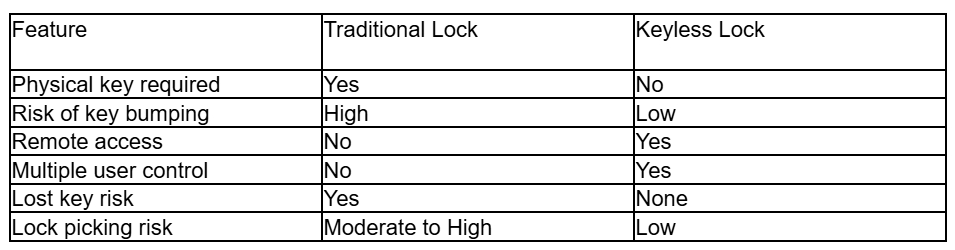
While traditional locks are mechanical and simple, their simplicity can also be their biggest weakness. Lock bumping and picking remain real threats.
Meanwhile, keyless entry locks often include digital access tracking, allowing you to know who’s coming and going, and letting you revoke access instantly through an app.
Cons of Keyless Locks: What to Watch Out For
No system is perfect, and keyless locks do have limitations. Knowing the cons of keyless helps you prepare.
- Power dependence: Since most keyless locks are electronic, they rely on an electric battery. If it dies and you don’t have a backup, you’re locked out.
- Wi-Fi vulnerabilities: If your lock uses Wi-Fi connectivity, a potential hacker might try to exploit an outdated software patch or a weak password.
- Technology failure: Just like your phone or computer, a smart lock may experience glitches or firmware issues.
- Privacy concerns: With any smart home device connected to the internet, there’s always some risk of a data breach.
How to Make Your Keyless Lock More Secure
If you decide that a keyless entry door lock is right for your home, add these extra precautions to give you peace of mind.
- Choose a reputable brand: Look for locks designed with security in mind and backed by companies like Google or Amazon.
- Keep your firmware updated: Updates contain patches for bugs or security gaps.
- Use strong passwords and enable two-factor authentication: This adds another layer of security.
- Install a backup option: Many smart locks include a traditional key or keypad as a fallback.
- Limit the number of access codes: And delete temporary codes as soon as they’re no longer needed.
Are Keyless Entry Door Locks Safe for Texas Homeowners?
Many homeowners across Texas are updating to keyless options not just for convenience, but for better security. Whether you’re managing a busy family schedule, running a smart home, or simply tired of carrying a house key, a smart lock offers solutions and flexibility a traditional lock simply doesn’t.
But like any part of your security system, the strength of your keyless lock depends on how you use it.
If you’re integrating it into a broader solution – including cameras and sensors – it can make your home protection strategy more robust. Visit our resource on home security systems for residential properties to see how a smart lock fits into the full picture.
So, Is Keyless Entry Safe for Home Use?
Here’s the takeaway: Whether a keyless entry lock is right for your home depends on the quality of the lock and how you set up your security features.
- Modern smart locks can be extremely secure if protected with strong passwords, regular software updates, and two-factor authentication.
- A keyless lock may give you more control through remote access, temporary access codes, and logs of everyone who enters your home.
- It’s important to stay on top of maintenance, like replacing a low battery before it dies and checking firmware updates through your smartphone app.
While no system is completely risk-free, today’s best keyless locks offer a powerful combination of convenience and security. They’re designed to keep your locks secure against modern threats with encryption, multi-factor authentication, and access flexibility.
Conclusion: Take Control of Your Home Security Today
The digital world is here to stay – and it’s made serious strides in helping homeowners protect what matters most. If you’re transitioning to a keyless lock system for your home in Texas, you’re not just upgrading your lock; you’re upgrading your lifestyle.
With the right smart lock, your phone becomes just as important as your keys. And with features like temporary codes, high-security authentication, and mobile control, you gain tools that a traditional key can’t offer.
Still unsure if keyless entry is safe for your home? We’re here to help. Let True Home Protection guide you in tailoring a lock system for your home that gives you true peace of mind.
Explore your options, and take the first step toward smarter home protection today.