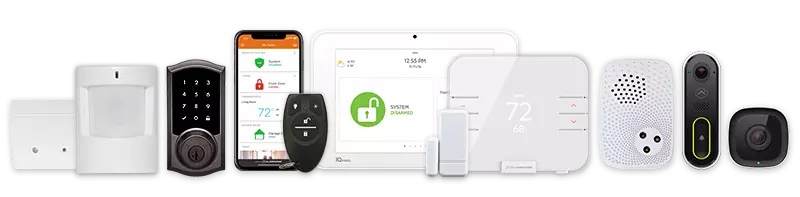
If you are a Texas homeowner trying to sort out home automation vs smart home, you are not alone. The terms get thrown around like they mean the same thing, but there is an important difference that affects your budget, your daily routine, and your home security.
This guide breaks it down so you know what you are actually buying, how the systems work together, and which setup makes sense for your modern home.
Smart Home: What It Really Means Today
A smart home refers to a residence equipped with devices that connect to the Internet and respond to you in a more intelligent way than a simple switch.
Think of smart home technology as individual smart home devices you can control with your phone, tablet, or voice commands through Amazon Alexa or Google Home.
Common examples of smart home tech include:
- A smart thermostat like Google Nest or Nest Thermostat that adjusts temperature based on your schedule or the weather
- Smart lighting or a full smart lighting system with smart bulbs you can dim or change from your phone
- Smart locks that let you unlock the door remotely
- Smart cameras, security cameras, and home security systems with real-time monitoring
- Smart speakers such as Google Nest (smart speakers) or Alexa devices
In short, a smart home focuses on remote access, convenience, and connected smart device control.
How smart homes use tech every day
Smart homes use Wi-Fi, the Internet, and sometimes standards like Zigbee or Z-Wave as a communication protocol so your devices connected to the network can share data and respond to your habits.
Smart homes use:
- Speech recognition (through Alexa or Google) so you can control smart home devices using your voice
- Apps that let you remotely control lighting, home security, and entertainment systems
- Sensors, like a motion detector or door sensor, that trigger cameras or lights
Smart homes focus on your daily living environment and comfort: like lighting, climate control, and entertainment systems that fit your habits and lifestyle.
Home Automation: Going Beyond Simple Smart Devices
Now let us look at home automation. Home automation refers to using technology to automate tasks within the home without the need for manual input every time.
A basic smart home vs a more advanced automation setup comes down to this:
- A smart home lets users control devices.
- Home automation takes that a step further and lets the system decide when to act based on rules, time, and triggers.
How home automation focuses on automatic control
Home automation focuses on building an automated system that:
- Runs tasks within the home based on time, like turning off lighting systems at midnight
- Uses a sensor (like motion, temperature, or door sensors) to trigger actions
- Reduces the need for manual control of many systems
For example, home automation often ties together:
- Heating, ventilation, and air conditioning for more efficient climate and energy conservation
- Home security systems, including security solutions and smart security cameras, for peace of mind
- Lighting control system setups that respond to motion or daylight
A home automation system requires some form of centralized control, like a hub, server (computing) device, control panel, or app that manages multiple systems at once.
Smart Home and Home Automation: How They Work Together
So what is the difference between a smart home and home automation?
- A smart home refers mainly to smart home solutions focused on convenience and device control.
- Home automation acts as the brain that can run various home systems together, often without you having to think about it.
Put simply:
- Smart homes focus on devices.
- Automation may focus on routines and rules across various home systems.
In real life, smart homes and automation normally blend. Many systems often combine automation and smart home technologies so the homeowner can both control and automate.
Home Automation vs Smart Home: Key Differences That Matter
To make the difference between smart home setups and home automation crystal clear, let us compare them side by side.
Control vs automation: who is in charge?
This is the real control vs automation question.
- In a smart home, you are usually in charge. You open an app to remotely control a smart lighting system, adjust a thermostat, or lock the door.
- In true home automation, the home automation system decides when to run certain actions based on time, triggers, and your previous habit patterns.
Home Automation System vs Smart Home Systems
A full home automation system is usually more structured than a scattered set of devices.
What a home automation system requires
Installing a home automation system usually involves:
- A hub, server, or control panel that provides access and control for different components.
- Devices from different brands that still work together thanks to good interoperability and supported communication protocol.
- Some planning of your home ecosystem so devices communicate and integrate smoothly.
Many systems often use:
- Google platforms such as Google Home or Google Nest
- Amazon (company) options like Amazon Alexa
- Protocols like Zigbee and Z-Wave for reliable connectivity
Home automation utilizes triggers based on time and sensors to automate systems like lights, home security, and climate control.
By contrast, smart home systems might simply be devices like smart plugs, a few bulbs, and a thermostat that you control one by one.
Smart Homes Use Automation Too: Where the Lines Blur
The truth is that modern smart home automation platforms often blend both styles. Smart homes use routines and schedules so that automation takes care of simple tasks for you.
For example:
- A Nest Thermostat or similar smart thermostat can automate your heating, ventilation, and air conditioning based on time and your behavior.
- A smart lighting scene can turn on softly in the morning, then off when you leave, based on home automation acts triggered by a motion detector.
- Home automation often combines smart locks, cameras, and an alarm into one app so you can control smart home devices and view closed-circuit television style feeds for real-time monitoring.
In other words, smart homes use automation, and automation may use smart home devices. It is not either-or.
Advantages of Home Automation and Smart Home Tech
For a Texas homeowner, the advantages of home automation and smart home setups often include:
- Energy savings by adjusting electricity use, light, and heat automatically
- Better home security with integrated security systems, smart cameras, and security cameras
- Greater convenience and less need for manual actions on daily tasks
- A more comfortable home environment and living environment
Some key advantages of smart setups specifically:
- The advantages of smart devices often include low upfront budget entry: start with one switch or a thermostat.
- Easy ways to remotely control your home systems via app, telephone, or voice.
- Flexible smart home solutions that expand as you add more devices connected to your home ecosystem.
How To Integrate Automation and Smart Home Technologies
If you already have smart devices in your Texas home, the next step is learning how to integrate them into something more powerful.
Steps to automate your modern home
- Take inventory of what you own – List your current smart devices: smart thermostat, smart lighting, cameras, smart locks, and any entertainment systems.
- Choose a main platform for home control – Decide whether you want to center on Google Home, Amazon Alexa, or another platform. That platform will become your main place for home control and scenes.
- Integrate devices from different brands – Look for devices from different vendors that clearly state they work with your main platform. This improves interoperability and lets many systems feel like one.
- Create scenes and automations – Use the app or hub software to:
- Turn lights on based on time and sunset
- Adjust temperature based on whether you are home
- Arm home security systems when you leave a defined space
- Gradually add advanced home automation solutions – Advanced home automation can include:
- More complex energy and utility management
- Lighting control system rules in multiple rooms
- Automated blinds and systems like whole-house audio
With careful planning, home automation takes your existing smart devices and combines them into a smarter ecosystem that truly works together.
How True Home Protection Can Help Texas Homeowners
Home automation acts as a long-term investment in comfort, efficiency, and security. But with so many brands, communication protocols, and options, it is easy to feel overwhelmed.
True Home Protection helps Texas homeowners:
- Design home automation systems that match your budget, habits, and space
- Integrate cameras, smart locks, lighting, and climate controls into one reliable system
- Set up automation and smart home technologies that reduce the need for manual tasks while keeping you in control
If you want to see what a professionally designed setup could look like, explore our home automation systems to understand your options.
Conclusion: What Should You Do Next?
The difference between smart home setups and full automation comes down to how much work you want your house to handle for you:
- A smart home refers mainly to connected devices and apps.
- Home automation refers to rules, schedules, and integrated systems that work together within the home.
If you are starting out, pick one or two smart home devices, like lighting or a thermostat, then slowly integrate them into scenes and automations. As you grow more comfortable, you can move toward advanced home automation that manages lighting, security, and climate automatically.
When you are ready to move from gadgets to a truly smart Texas home, reach out to a trusted local team that understands both smart homes and automation – so your home can quietly work in the background while you enjoy the results.