Do CCTV Cameras Work Without Electricity? What You Need to Know
When power outages happen, one of the first concerns for homeowners and business owners alike is security.
A question people often ask us is: do CCTV cameras work without electricity? It’s a good one. Because if your property is unprotected during a blackout, that defeats the whole purpose of your security system.
Let’s clear up the confusion and walk through how CCTV (closed-circuit television) cameras work, what kind of power they need, and how to keep your system working even during power outages in Texas.
How CCTV Cameras Normally Work: The Role of Electricity
Most CCTV systems rely on electricity from the grid to stay operational. Whether it’s a traditional wired CCTV setup or more modern IP cameras, the majority need power to function.
Here’s what electricity powers in a typical security camera system:
- The camera itself, whether analog or digital
- The digital video recorder (DVR) or network video recorder (NVR)
- Any Wi-Fi or communication protocols that stream footage to your devices
- Optional features like 4K resolution, motion detection, or security alarm integration
That means if the power goes out and there’s no plan in place, your cameras will stop working. No video. No recording. No alerts.
Do CCTV Cameras Work Without Electricity?
Let’s get straight to it: CCTV cameras won’t work without electricity unless they are specifically designed or equipped to operate without electricity or have backup power sources in place.
Why is this so critical? Because areas across Texas are no strangers to power outages, especially during extreme weather, high energy demand, or unexpected grid failures.
The good news? There are ways to keep your security system running even if the main power goes down.
How Can a CCTV Camera Work Without Electricity?
If you want CCTV cameras to work without electricity, you’ll need alternative or emergency power solutions in place.
Some of the most common options include:
Battery-Powered CCTV Cameras
Battery-powered CCTV models run on an electric battery, often rechargeable and long lasting. These kinds of wireless CCTV cameras can continue to operate, record, and send notifications, even during a power outage.
However, keep in mind:
- The backup power depends on the capacity of the battery.
- Some battery power solutions only last for several hours.
- Not every type of CCTV supports battery operation.
Still, for monitoring without relying solely on the power grid, battery models provide flexibility and peace of mind.
CCTV Cameras with Solar Panels
In Texas, where sunlight is in generous supply, solar-powered CCTV cameras are a smart, green solution. These systems use solar panels to draw solar power, storing it in backup batteries.
Why solar is appealing:
- Ideal off-the-grid solution
- Continuously charges during daylight
- Reduces long-term electric power costs
Just be aware that solar-powered cameras may still rely on communication protocols like Internet access or telephone lines.
Uninterruptible Power Supplies (UPS)
Think of a UPS power device as a battery backup for your entire camera system. It kicks in automatically during a power outage, allowing cameras to continue to operate seamlessly.
Pros of a UPS:
- Keeps your CCTV system working instantly
- Ideal for short-term power interruptions
- Easily integrated with DVRs or advanced CCTV setups
However, most uninterruptible power supplies are designed for temporary use, minutes or a few hours depending on load.
Electric Generators
If you’re in an area with frequent outages, a power generator might be your friend. These alternative power sources can support your security system running during extended power outages.
A generator powers:
- Your CCTV camera
- The internet router
- The lights and system controls
It’s a more expensive option but suitable for full-property backup.
What Happens to Recording During a Power Outage?
This is a common concern: Can a camera record without electricity?
The answer depends on the model. Some CCTV cameras operate with internal storage or cloud backups and will record without electricity if they are on an emergency power system or internal batteries. Otherwise, recording stops when the camera stops working.
To ensure continuous surveillance without interruptions:
- Use battery-powered or solar-powered options
- Store footage in the cloud (requires internet access and battery backup)
- Invest in a UPS or generator for continuous power to work
Key Considerations for Texas Homeowners
In Texas, we know power interruptions aren’t just hypothetical; they’re real. To make sure your security cameras function without fail, ask yourself:
- Do power outages happen often in your area?
- How critical is it that your security camera stays active?
- Can you afford power backup like a UPS or generator?
- Are you able to maintain battery-powered CCTV or solar-powered units?
If your security system is essential for business or loved ones’ safety, planning for uninterrupted power is not optional.
Which Type of CCTV Camera Is Best for Use Without Power?
If you’re shopping the CCTV options available, here’s what to look for in CCTV cameras that operate without the grid:
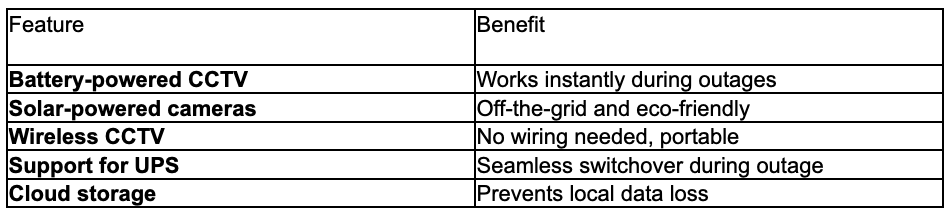
Each camera can work without electricity only if it’s paired with a reliable backup power source. Regardless of your setup, make sure your power source can sustain your system long enough to maintain surveillance without interruptions.
Does My CCTV Camera Still Need Internet?
Not always. Some CCTV models record locally on an SD card or DVR. But if you:
- Want live streaming
- Use residential video monitoring systems
- Receive mobile alerts and alarms
…you’ll need an internet connection and backup power for your router.
That’s why it’s smart to keep your internet equipment on the same uninterruptible power supply as your system.
How Long Can CCTV Continue Operating on Backup Power?
The duration a CCTV camera can continue depends on:
- Battery size/capacity
- Number of cameras operating
- Power usage of each camera
- Other connected devices (NVR, router)
Most setups will last:
- UPS power: 15 minutes to a few hours
- Battery-powered CCTV: 4 to 12 hours
- Generator systems: Several days (with refueling)
Check your setup carefully to be sure your backup power to keep cameras functional matches your needs.
Final Thoughts: Staying Protected During Power Outages
To wrap it up: CCTV cameras provide strong security solutions, but the truth is, CCTV cameras often stop working when the power is out, unless you plan for it.
At True Home Protection, we believe that safety shouldn’t go on pause just because electricity is unavailable. That’s why we help people in Texas find backup power solutions that keep their system working around the clock.
A CCTV camera can work without electricity, but only if you support it with smart planning and the right equipment. Whether it’s a solar panel, UPS, or battery-powered unit, there’s a way to stay secure, even when the lights go out.
Want expert help designing a CCTV solution that works in any emergency? Learn more about our residential video monitoring systems and discover how to keep your family and property safe, regardless of what the grid is up to.
Feel free to share this insight with a neighbor or follow us for more updates on keeping your home secure in Texas. Contact us now.