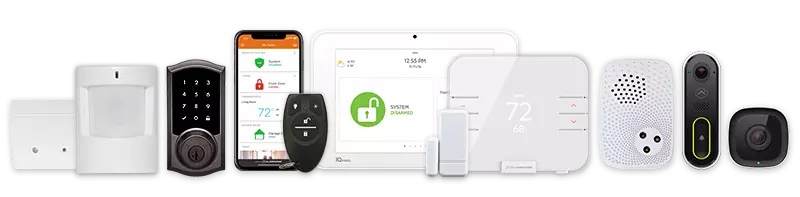
If you’ve ever wondered what actually goes into an access control system, you’re not alone.
Most business owners know they need one, but the moment someone starts listing components, hardware, and software options, it gets confusing fast.
Let’s break it all down in plain language so you know exactly what you’re working with before making any decisions.
What Is an Access Control System, Really?
At its core, an access control system is a technology-driven solution that determines who can enter a space, when they can enter, and under what conditions. It’s the digital and physical backbone of security for any serious business or commercial property.
Think of it as a layered policy enforcement tool. Instead of handing out physical keys that can be lost or copied, you’re managing authorization through credentials, software, and computer hardware that work together as one system.
The Core Access Control System Components
Credentials: How People Prove Who They Are
A credential is the method someone uses to identify themselves at a door or entry point. Common types include:
- Key cards and badges – These use radio-frequency identification (RFID) technology to communicate with a reader when held nearby.
- Personal identification numbers (PINs) – Entered on a keypad, these are simple but work best when layered with another method.
- Biometrics – Fingerprints, retina scans, and facial recognition fall under this category. Biometrics are harder to fake or share, making them a strong choice for high-security areas like a server room or data center.
- Mobile credentials – Smartphones can act as digital badges using Bluetooth or NFC signals.
The stronger the credential, the harder it is for an unauthorized person to gain entry.
Readers and Keypads
A reader is the hardware device mounted near a door that communicates with a credential.
When you tap a badge or scan a fingerprint, the reader captures that data and sends it to the control panel for verification.
Keypads are a specific type of reader that require a personal identification number. Many modern setups combine a keypad with a card reader to support multi-factor authentication, which means a user needs more than one form of verification to gain access.
Electronic Locks
The electronic lock is what physically secures the door. Unlike traditional locks, these can be triggered remotely through software or automatically based on a signal from the access control system.
Common types include magnetic locks, electric strikes, and electrified mortise locks. Each serves a different purpose depending on door type, traffic volume, and the security level needed.
The Control Panel and Server
The control panel is the brain of the operation. It processes the data sent from readers, checks it against stored authorization rules, and then sends a signal to unlock or keep a door locked.
Larger installations may use a dedicated server or connect to cloud computing infrastructure for centralized management. Cloud-based systems make it easier to manage multiple entry points across a large commercial property without being tied to physical computer hardware on-site.
Access Control Software and Application
The software layer is where management happens. Through an application, administrators can set up role-based access control (RBAC), which assigns permissions based on a person’s role in the organization. A warehouse worker, for example, wouldn’t have the same access as an IT technician who needs to enter a server room or data center.
More advanced setups may use attribute-based access control or mandatory access control models depending on compliance requirements and security policies.
Modern access control platforms continue to evolve, helping organizations integrate hardware, software, and security policies into a more unified system.
Sensors and Monitoring Integration
Sensors work alongside the system to detect door position, motion, or unusual activity. A door sensor can alert management if a door is held open too long or if it opens without a valid credential being presented.
These signals feed into monitoring dashboards, giving security teams real-time visibility over access events and potential breaches.
Scalability: Building a System That Grows With You
One of the biggest mistakes businesses make is buying a system that works for right now but can’t scale. A growing Texas business might start with five doors and end up needing fifty.
A well-designed access control setup uses modular computer hardware and flexible software so you can add doors, users, and locations without overhauling everything. Cloud computing platforms make this especially manageable, since updates, user management, and policy changes can all be handled remotely.
Why Multi-Factor Authentication Matters
Relying on a single credential, like just a badge, leaves room for error. If a badge is lost or stolen, that door is compromised. Multi-factor authentication requires a combination, such as a badge plus a PIN on a keypad, which adds a critical extra layer.
For high-risk areas like a server room, executive floor, or data center, multi-factor authentication isn’t optional – it’s a baseline requirement of solid computer security practice.
Choose the Right Access Control System Components for Your Business
A complete access control system brings together credentials, readers, electronic locks, a control panel, software, and sensors into one cohesive setup. When these components are configured correctly and supported by clear authorization policies, you get a system that’s both secure and easy to manage.
Whether you’re protecting a single commercial property or managing access across a larger enterprise, understanding these components puts you in a much stronger position to make the right decisions.
Conclusion
Getting your access control system right starts with understanding what you need and why each component matters. True Home Protection has been helping Texas businesses build secure, scalable setups since 2011, with commercial-grade equipment, same-day service, and no hidden fees. If you’re ready to take control of who gets access to your space, reach out to the team at True Home Protection at +1-800-393-6461 to get started today.