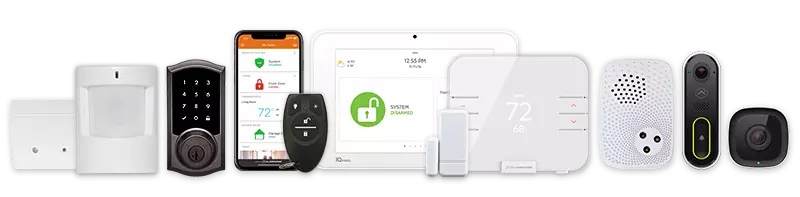
Welcome to the PowerSeries Neo support center. Below are the most important user-facing features you need to operate, manage, and maintain your alarm system confidently and easily.
Quick Reference Guide
The PowerSeries Neo system includes shortcut keys for common actions. Use this table to quickly perform the most frequent tasks:
| Action | Key Sequence |
|---|---|
| Away Arm | Hold 🔓 Away key (2s) + [Access Code] |
| Stay Arm | Hold 🏠 Stay key (2s) + [Access Code] |
| Night Arm | [*][1] + [Access Code] |
| Disarm | [Access Code] |
| Bypass Zone | [*][1] + [Access Code] + [Zone #] |
| Reset Smoke Detectors | [*][7][2] |
| System Test | [*][6] + [Master Code] + [04] |
Visual Aid:
Quick Reference Keypad Table from Page 4–5
Keypad Symbols & Light Meanings
Understanding your keypad’s display helps you stay in control of your system.
Visual Aid:
Icon Keypad Display (Page 6)
Most Common Indicators:
- Armed Light: System is armed
- Ready Light: All zones are secure; system is ready to arm
- Trouble Light: System has an issue (view it using [*][2])
- Chime Icon: Audible chime is enabled for doors/windows
- Fire Icon: Fire alarm memory active
Stay Icon: System armed in stay mode
System Arming Modes
Choose the best mode based on who is home:
| Mode | Description |
|---|---|
| Away Mode | Arms all sensors. Use when nobody is home. |
| Stay Mode | Arms only perimeter sensors. Great for nighttime. |
| Night Mode | Arms all zones except areas like bedrooms. |
| No-Entry Mode | Arms system and disables entry delays. |
| Quick Exit | Temporarily disables door sensors for 2 minutes while staying armed. |
Visual Aid:
Example LCD display during arming (Page 8–10):
Emergency Alarm Keys
Hold down the designated key pair on the keypad for 2 seconds to trigger an alarm:
| Alarm Type | Trigger | Alert Behavior |
|---|---|---|
| Fire | Fire icon keys | 3 loud beeps |
| Medical | Medical icon keys | Silent alarm |
| Panic | Panic keys | Continuous siren |
Visual Aid:
Emergency Alarm Button Layout — Page 17
Using Wireless Keys & Tags
Your system supports wireless convenience:
- 2-Way Keyfobs – Arm/disarm the system remotely
- Proximity Tags – Tap your tag to the keypad to arm/disarm
- SMS Commands – Text the system from a mobile device to control it remotely
Visual Aid:
Wireless Key Diagrams — Page 19
Managing Users & Codes
You can manage who can access the system:
- Add/edit access codes
- Assign proximity tags
- View/edit user names
- Grant access to certain partitions (zones)
Tip: Use the [*][5] menu with the Master Code to manage users.
Visual walkthrough starts on page 22.
Test & Maintain Your System
Keep your system in good shape with these tools:
- System Test: Activates sirens and LEDs to confirm function
- Walk Test: Lets you trigger sensors to confirm operation
- View Troubles: Press [*][2] to identify issues like low battery, tamper, or AC loss
Visual Aid:
Trouble Indicator Matrix — Page 30–32
What Do Different Alarm Sounds Mean?
| Alarm Type | Sound Pattern |
|---|---|
| Fire | 3 beeps, pause, repeat |
| CO | 4 beeps, pause, repeat |
| Burglary | Continuous siren |
| Flood | 1 sec on, 3 sec off |
See chart on Page 17 for details.
Smoke & CO Detector Placement
Install detectors:
- Outside every sleeping area
- On each floor
- NOT in humid, dusty, or drafty locations
Visual Aid:
Detector Placement Diagrams — Page 41
Need More Help?
- Reset required? Call your monitoring center.
- Troubleshooting an issue? Use [*][2] or check the “Trouble” light.
- Forgot your code? Your installer or central monitoring station can help.
You can also refer to DSC NEO User Guide PDF File for additional information